| OCR Text |
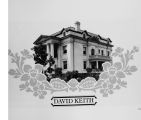
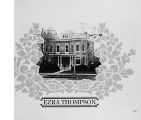
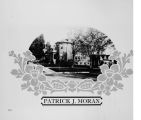
Show " " I fc . EZRA THOMPSON,. 105 < t seventeen Ezra Thompson was freighting goods / \ between Salt Lake City and the Nevada mining A. \~ districts, and as he traveled over the desert country he dreamed of being a part of the excitement that was characteristic of the niining towns - not as a mine hand but maybe as a mine owner. He was a strong lad, fond of sports, especially baseball. He played the game very well himself. And he loved horses. Someday he would have a really fine horse - maybe two - and a fine carriage. Ezra had been born on July 17,1850, in Salt Lake City, and had grown up in humble circumstances, the son of a millwright who was accredited with building many of the mills in the Mormon settlements. Like other boys of the pioneer period Ezra had spent his days herding, choring, and working at odd jobs to contribute to the support of the household. Ezra, his sights on the future, soon left the Nevada freight run and set himself up in Park City in the hauling business while he watched for an opportunity to break into the mining field. He finally found his chance in the old Northland and Nevada Mine, eventually becoming the owner. Although this mine was consolidated with the Silver King, still it was the start toward a series of mining successes for Ezra. Thompson remained in Park City for fifteen years, during which time he became connected with Ezra Thompson when he was mayor of Salt Lake City. some of the largest mines in that district. He organized the Thompson Mining Company, he was an officer and stockholder in the Daly- West and Silver King mines, and he was president of the Idaho Gold Mining and Milling Company and of the Cardiff Mining and Milling Company. He also served two terms on the citv council. 106 ^ . ^ Emily P. Thompson. Salt Lake City officials and engineers inspect a project site, probably for a water conduit, contracted by Patrick J. Moran. Mayor Thompson, center, Moran seated on his left. Thompson and Emily Pugsley, the daughter of a manufacturer and mining man, were married in 1884. They became the parents of four children: Lynn, Norinne, Ezra, and Clyde. The Thompsons moved their residence from Park City to Salt Lake where they bought the Brigham Street home of Frederick C. Gentsch, an agent for Pacific Express Company. Thompson was a capable businessman exhibiting great energy and determination. His genial and kindly nature made him well liked among his associates who urged him to carry on his political career. He was elected to three terms as mayor of Salt Lake City, serving in the early 1900s, during which time much was done to beautify the city. Curbs and gutters, 107 sidewalks, and paving were completed on many of the city streets. The Ezra Thompson Building for many years stood as another monument to the builders of the community. Thompson remained fond of athletics throughout his life and his dream of owning fine horses was fulfilled. An enjoyable pastime for the family was the Sunday drives. For those occasions they would don their Sunday best, and father Thompson would take the reins of his fine matched team and drive " way out to Liberty Park" to circle_ the perimeter path. Sometimes while riding by himself he would | see a fellow horseman and challenge him to a race. And h a was often seen giving his dustm the puffing and hopeless mechanical device, the automobile, which by law could travel only fifteen miles an hour. By 1904 there were reportedly thirty- eight automobiles in Salt Lake City and fifty in the state. It was not surprising that Ezra should i> _ 11 • - i r\ r\ e i , 1 Mayor Thompson an seen by artist f i n a l l y m 1 9 0 5 p u r c h a s e t h e Alan I„ Lovey tnjust For Fun: „ „. , . , ft . . . Cartoons and Caricatures of new contraption and find it Men in utah, 1906. both a challenge and a pleasure in a changing world. However, Thompson had a difficult time shifting the gears, so in 1906 he bought the new Owens Magnetic. There were no gears to shift and he could ride for fifty miles before running out of juice. He had to be sure he was near home at the end of the fifty miles, for then he could drive the Owens into Whitmore Oxygen a block and a half west of his home where he could have it recharged. Whitmorc's building still stands on South Temple. The company, formed to service and recharge electric automobiles, later became Whitmore Oxygen Company. 108 The Thompson house, built about 1893, was purchased by Ezra in 1898. It had a warm and friendly appearance with its square tower on the left front corner and the ornamental ironwork over the porch. Although the home has been remodeled for office space, it still contains some original features. The wall paneling, beams and ceiling paneling, and one fireplace mantel are all. made of the same rich wood. The windows on both floors of the home are beautifully made with an upper panel of leaded and stained glass. The original barn was replaced in 1910 with a two- story brick garage and stable, with a gable roof, cupola, and dormers. Part of the second floor of the garage contained rooms for a servant's apartment. The handsome structure had deteriorated over the years and was torn down in the early 1970s. The home served the Thompson family well until 1917 when they bought the David Keith mansion across the street at 529 East South Temple. However, Lynn, the eldest son, and his family continued to live in the home.* EZRA THOMPSON 576 East South Temple Built ca. 1889; altered 1910 Architect: unknown Owners: Frederick C. Gentsch, Ezra Thompson ( 1898) Present status: Children's Service Society 109 |