| OCR Text |
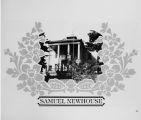
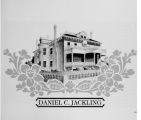
Show ^ tSki^^ k^ SB^ hk ^ DANIEL C. JACKLJNG; 63 D aniel Cowan Jackling had everything: youth, a powerful and untiring mind and body, vision, ambition, optimism, and confidence. He had technical skill, the art of command, and the knack of inspiring others to loyalty. Topping all, he possessed a dynamic personality that seemed to override the complexities of his personal life. As one source put it, Jackling was the greatest of the greats. His is the story of a poor frontier farm boy who became an industrial giant. Born August 14, 1869, in Bates County, Missouri, near Appleton City, to Daniel and Lydia Jane ( Dunn) Jackling, Dan was orphaned in his infancy. When he was but four months old his father died of injuries from being kicked by a horse, and his mother died a year later from burns received when she tripped while carrying a kerosene lantern. His mother's eighteen- year- old sister Abigail took Dan to live with her and soon thereafter married a farmer by the name of J. T. Cowan. Aunt Abigail was to become the mother of twelve children, so as time went on and the family grew Dan was moved from one relative to another. These years were full of adversity and struggle, his early education intermittent due to the distances from schools and the severe winters. As he became older he worked as a farmhand at fourteen dollars a month, saving most of it toward his future schooling, a goal he was determined to achieve. Daniel C. Jackling 64 By the time Dan was twenty he had decided on a course in engineering, and he graduated with a B. S. degree from Missouri School of Mines in 1893 at age twenty- four. In return for his room and board, he washed pots and pans in a local hotel. Later, he worked in the chemistry lab, and during his senior year he became student assistant in the department. Due to the financial stress of the 1890s he failed to secure a position in his chosen field, so he spent a short, bleak time teaching chemistry. Since Cripple Creek, Colorado, was very much in the news at that time, he headed for the area, having only three dollars in his pocket upon his arrival. Huge, ruddy and robust, Jackling looked more like one of the laced- boot brigade than a schoolteacher, and in Cripple Creek he moved from job to job as assayer, mill hand, chemist, and metallurgist. In 1895, while working in the Lawrence Mill - in which Capt. Joseph R. DeLamar owned a large interest - the plant burned down, ending Dan's Cripple Creek experience. His next venture was with Charles MacNeill in starting the first chlorination plant in Colorado. He also conducted metallurgical tests for DeLamar ( a former sea captain turned speculator in mines) both in Colorado and in Nevada, and in 1896 the captain engaged him to make more extensive experiments at Mercur, Utah. In 1899, when DeLamar was ready to investigate Enos Wall's copper properties that sprawled across the floor of Bingham Canyon and up the bordering hillsides, Jackling was his choice to analyze the metallurgical problems involved in mining the low- grade copper ore. Jackling felt certain that he could devise a method of profitably working the recalcitrant ore. But DeLamar let his option on a share of the Bingham property expire when one of his engineers reported that the ore could not be profitably mined. Charles MacNeill, Jackling's associate in Colorado, had good connections in New York and Boston, and was able to buy Captain DeLamar's property. When Jackling returned in 1903 from building a mill at Republic, Washington, the Utah Copper Company was organized with MacNeill as president, Wall as vice-president, and himself as general manager. Jackling's plans were prodigious. The capital required would run into millions. He asked for money and still more money, appealing to a number of well-known capitalists, including the Guggenheims and Bernard Baruch, the self- made millionaire. A suggested three- million- dollar bond issue frightened some members of the company, including Wall who strongly opposed the bond issue and the ambitious plan. Wall lost his fight in the company council, but obtained an injunction and took the matter to court. 65 He retained his interest in the company, however, and was director until 1908 when he resigned and devoted his time and energy to fighting Jackling and Utah Copper. Because Wall had found the ore body, he felt entitled to a primary say in how the company was run. Jackling, to the seasoned miner, was a young upstart who was doomed to failure, and he feared that the gigantic investment could never be repaid. Wall became Jackling's most bitter enemy. Jackling threw himself into his work with his usual enthusiasm. Despite the heavy financial burden that hung over the new operation, the six- thousand-ton Garfield Mill, later known as the Magna Plant, was completed, and the huge shovels began eating away at the mountain, stripping off the ore body just two months behind Samuel Newhouse's Boston Consolidated. Newhouse was several years ahead of Jackling in generating widespread interest in Bingham copper and was one of the first to visualize open- pit mining. The first stripping was initiated by him in 1906, his Boston Consolidated steam shovel being placed in operation in June of that year and the Boston Consolidated mill being completed in 1907. The rival company ( Utah Copper) would have to absorb the Boston in order to survive. Utah Copper backers knew how to play the game well, and in the end Boston Consolidated was taken over by the stronger company. Jackling, second from left, with Charles M. MacNeill, left, and several mining associates. 66 Wall's criticism of Jackling's methods was soon drowned in a flood of dividends. The estimates were more than realized in the first year, and Utah Copper Company even survived the country's panic of 1907. In a period of a few years after the formation of the company the levels of the mining operation had formed a huge pit with the ore cars and shovels resembling miniature objects fastened to the sides of a cavernous bowl. The history of Utah Copper Company from its organization in 1903 through its stupendous growth and development is credited to the genius and perseverance of Daniel C. Jackling. By his successfully initiating mass production of copper from low- grade ore, the mining operation at Bingham, Utah, would become one of the largest of its kind in the world. In the first thirty years the company would pay its stockholders more than 8250 million in dividends. Everything Dan Jackling did he did in the grand way. He worked hard and played equally as hard. In college he had not had time or money for frolicking. As the Copper Prince he seemed to make up for it. He was a two- fisted drinker who had little sympathy for his cronies who could not keep up, and yet he would appear at work the next morning after a night of revelry, bright- eyed and enthusiastic about the day's work. His alma mater was not forgotten. The homecomings at Rolla, Missouri, were extravaganzas. For many years Jackling arrived in a five- or six- car train that was switched onto a siding located a few blocks from the college. There, for three or four days, he held open house for students and alumni who enjoyed unlimited fare, drinks, and even women furnished for their pleasure- all at Jackling's expense. This annual bacchanal was the talk of the campus for months following. The rumors that have surrounded Jackling's private life over the years cannot all be substantiated, but his exploits as a Casanova are legendary. On Salt Lake City's Commercial ( Regent) Street a woman fell from a second- story window to her death. Moments before, Dan had been dancing with her in her small apartment. Then there was Helen Blaze who accompanied him in public much to the consternation of the townspeople. He set her up in business on Commercial Street, for many years Salt Lake City's red- light district. Handsome horses, a carriage, and a stable were among the many gifts he showered on her. In her accustomed seat at the Salt Lake Theatre Miss Blaze was conspicuous with her expensive dresses and flaming red hair. Another of Jackling's women in Bingham was supported by him into her old age, although he had long since moved to another state. Jackling was an enigma, an uninhibited playboy who at times seemed totally unrelated to the hard- working mining genius. 67 Dan Jackling resting on step of his private railroad car with an unidentified companion. From 1904 to 1942 Jackling served as director, general manager, managing director, or president of fifteen important mining and metallurgical corporations all over the West, including Alaska; several railroads and banking companies, including the Chase National Bank of New York City; Utah Fire Clay, and Utah Power and Light Company. He considered his role in the development of steam power plants and water power as one of his most gratifying experiences. As director of United States explosive plants during World War I, Jackling was responsible for building several smokeless powder plants and was awarded the Distinguished Service Medal by President Woodrow Wilson. And in 1933 the mining, mechanical, electrical, and civil engineering societies of the United States awarded him the coveted John Fritz Medal. Jackling was a thirty- second degree Mason and held memberships in at least eight technical societies, both national and regional, and a number of the most prestigious clubs and fraternal organizations in Utah and California. He was interested in political affairs, too, but held only minor offices in his early days. A member of the State Capitol Commission from its beginning, he left Utah before the building was completed. Years later, on his eighty- fifth birthday, a nine-foot statue of him was unveiled in the beautiful marble 68 rotunda of the Capitol, a tribute to the man who opened up " the richest hole on earth." Remembering his own difficult years as a student, Jackling set up a fund with the American Institute of Mining Engineers to assist students with their finances. They could borrow from the fund and pay back the loan when they became established. He financed the gymnasium and football stadium at Missouri School of Mines and donated a substantial sum toward the construction of Bingham High School and its gymnasium. His contributions to various lodges and other causes can never be measured. For individuals, his favorite gifts were handmade deerskin gloves, which he ordered by the gross. When Jackling decided to take up residence on Brigham Street, he purchased the home built in the late 1890s by William A. Sherman, another mining man whose principal interest was in the Sunshine Mine in the Camp Floyd Mining District. Jackling did not lavish money on his home as did some of the other Brigham Street millionaires. The home was attractive, but it lacked the fine woods and grandeur of the more pretentious residences. The Copper Prince did not seem to fit into the whirl of Brigham Street social events, perhaps because of the difference in his lifestyle. He left the South Temple home in 1911 to reside in his special suite on one of the upper floors of the new Hotel Utah. He was president of the so-called Hotel Utah Operating Company and the principal stockholder. It is said he designed the very elegant lobby. Jackling had married Jeane Beatrice Sullivan, a schoolteacher, during his Cripple Creek days. When his work took him to Mercur, Jennie, as she was called, resigned her teaching job to go with him. In Mercur, in 1896, she gave birth to a baby girl whom they named Lislel Lydia. The baby lived only one year, but Jackling's grief over her death continued for many years. It was whispered that even into his Utah Copper days he kept a box containing the baby's clothes in his office vault. Probably because of the tragedy, his attention often turned to other children. Whenever his private train pulled into a station and crowds greeted him, he had eyes only for the children, often handing out coins and sometimes mineral nuggets. One time while in a Bavarian town he saw a merry- go-round with only a few children riding. Many others stood watching as the beautiful animals went up and down and around and around. Upon inquiring why they, too, were not riding, he found they had no money. Jackling went to the owner, purchased the concession, and then returned it with the stipulation that all the children could ride whenever they wanted. How this well- meant gesture worked out is not 69 The beautiful lobby of the Hotel Utah in the 1920s. 70 known, but it serves to illustrate the love in his heart that was not often manifest. During the years of her husband's escapades, Mrs. Jackling, still living in the South Temple home, learned to ease her despair in alcohol. Neighbors and friends who cared and sympathized visited her, offering friendship and understanding. But after Jackling's move to the hotel, she closed the door on her Utah home and left for Los Angeles. On September 18, 1914, at age forty- two, Jennie died in Los Angeles of Blight's disease. Early in 1915 Jackling made plans to move permanently to the West Coast, first having the bodies of his wife and child brought to Salt Lake City where the two were interred in Mount Olivet Cemetery on March 18, 1915. Less than three weeks later, on April 5, he married Virginia Jolliff, a beautiful San Francisco socialite. In preparation for his move to San Francisco, Jackling had earlier leased the top floor of the Post Street wing of the Saint Francis Hotel and had it remodeled and decorated. In San Francisco he would be more strategically located to run four copper mines and several mills. For besides Utah Copper, he headed Nevada Consolidated Copper Company, Ray Consolidated Copper in Arizona, and Chino Copper Company in New Mexico. He also bought a private railroad train to facilitate his transportation to and from the mines. It included a diner, a club car, a parlor car, a sleeper, and an office complete with maps, papers, and everything necessary to carry on business while en route. In 1913, to travel to and from his Alaskan interests ( he had an unsuccessful experience with mines near Juneau), he purchased a yacht reported to have cost five hundred thousand dollars. An additional hundred thousand was spent in alterations. Designed for speed with four- thousand- horsepower engines, she was two hundred sixty- seven feet long, required a crew of fifty, and cost an average of twenty- five thousand dollars per month to operate. This glamour girl of the seas had accommodations for thirty guests, a movie theater, a miniature golf course, a completely equipped office, two brass guns for saluting purposes, and a host of other appointments. The young lady who christened the Cyprus was rewarded with a necklace of diamonds and pearls for her performance. The Jacklings lived at the Saint Francis for several years after their marriage, then occupied the entire top floor and tower of the Mark Hopkins, which eventually was converted to the famous cocktail lounge. At the same time, the Jacklings bought a two-hundred- acre estate at Woodside in San Mateo County, California. Jackling spent much of his later 71 years at Woodside, rarely going into town, and it was there on March 13, 1956, at age eighty- six, that he closed his eyes for the last time. & DANIEL C. JACKLING 731 East South Temple Built 1898 Architect: Walter E. Ware Owners: William A. Sherman, Daniel C. Jackling Present status: offices 72 |