| OCR Text |
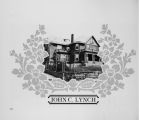
Show JOHN C. LYNCH 222 J ohn Courtney Lynch was born January 21, 1863, in Ivesdale, Illinois. Like many other men of the Brigham Street scene, he spent his childhood on the family farm. At Terre Haute, Indiana, where he was attending Commercial College, he met his future wife, Jennie Byrne. John's interest in the West and its opportunities was roused to action when he was nineteen years of age. Denver was his first stop. Then he heard of the iron mines of southern Utah and headed in that direction. He remained for short periods of time in both Cedar City and St. George, then left to seek a vocation in another locality. Salt Lake City was a bustling metropolis of the 1880s when Lynch arrived. He found work with the Mountain Ice Company, one of the earliest manufacturers of ice in the area. By 1889 he was settled and had a steady income. It was time for him to think seriously of the girl he had left in Terre Haute. Returning to his old college town where Jennie lived, he proposed, was accepted, and married the young lady in January of 1890. In Salt Lake City the Lynches grew in prominence. John eventually acquired controlling interest in the Salt Lake Ice Company, the successor to the original firm, serving as secretary and manager until 1928. He had mining interests in both Park City and Eureka John C. Lynch and was director of the old National Bank of the Republic for twenty- two years. The Lynches were active members of the Catholic church, and for nine years John was on the building committee of the new cathedral being constructed on the corner of " B" Street and South Temple. He donated generously to the cause 223 with both time and money. His fraternal affiliations included the Alta, Country, and Elks clubs, and the Knights of Columbus. Die Lynches, who were the first occupants of the home on East Brigham Street, purchased it from William Hatfield. Two years later Lynch extended the house to the west by enlarging the central room. The woodwork of this large and handsome room was Philippine mahogany. The beams of the ceiling were placed to form an unusual pattern. The woodwork in the entrance hall, the stairway and the dining room was pine, grained by a painting process. The Lynch residence was large and had a wonderfully liveable quality, ideal for the couple's five children. There were Robert, Joseph Courtney, John, Mary, and Dorothy, and, of course, a few extra neighbor children. Every neighborhood had a place where the gang gathered. The Lynch's backyard was one of those places. It was a lovely yard, surrounded by a latticework fence, with grapes on the fence across the back. And there were lots of roses, as well as apple and cherry trees. Once there were chicken coops, and there was a big barn made of brick like the house. The apples when picked were kept in large barrels. Every so often they had to be sorted and the riper ones removed. The cook for the household sorted the apples and made them into apple butter. She and Mrs. Lynch also bottled fruit and made jams and jellies. Court and John had a clubhouse in the barn. This solid old structure was a fun place to play. The barn contained a fancy carriage, Monarch, the horse, with a stall of his own, and a hayloft overhead. The laundry was there, too, with a pot- bellied stove to heat the water. The air smelled warm and soapy in the barn when clothes were being washed. Later, the family had to make room in the barn for the Pierce Arrow. Lynch learned to manipulate the gears all right, but when he tried to back out of the narrow driveway, he rammed the classic auto into the wall that bordered the drive. He quit then and there and never drove again. Those who knew Lynch spoke of him as a " fine man," a " wonderful person," and a " colorful individual." The children spoke of him as a disciplinarian, but a compassionate one. He taught them many things, one of which was the value of money - how to keep an account of their expenses and to go without if they overspent their allowances. He took the boys fishing and enjoyed die time he spent with them in the out- of- doors. John C. Lynch died September 2, 1939. Die family continued to live in the home until Mrs. Lvnch's death in 1962.* 224 JOHN C. LYNCH 1167 East South Temple Built ca. 1899 Architect: builder only Original owner: William Hatfield Present status: Queen of Peace House ( convent) Liberty Park was a favorite place for the cutters. David Naylor and Sarah E. Cavanaugh are bundled in the sleigh. 225 |