| OCR Text |
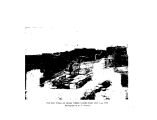
Show 514 COMMENTARY ON CORONADO. slowly into historical perihelion, the swathing has been stripped from this benighted mummy, and the forgotten or misinterpreted facts in the case have been recovered and interpreted aright in the critical light of modern methods of historical research. Yet it must not be assumed that when competent scholars had brought about this consummation the myths in the matter ceased to be current. They arc in full swing to- day, at the hands of ignorant, slovenly, or willfully perverse writers. For example, there is not to be found in all the 300 years of tinkering at tradition a more mythical narration than that given by F. S. Dellenbaugh as " The True Route of Coronado's March," in the Bulletin of the American Geographical Society, New York, Dec, 1897. This is not simply erroneous- it is preposterous- a sort of crazy- quilt thrown over the whole affair, only to be matched by the quisquillious scribblings of an Inman. Turning away from all such matters, whose name is legion, we may note some points of serious concern. One of the first writers of modern note in this case is James Hervey Simpson, a distinguished engineer officer of the United States Army, whose article entitled " Coronado's March in Search of the ' Seven Cities of Cibola' and Discussion of their Probable Location " occupies the Smithsonian Report for 1869, pp. 309- 340, map. Simpson simply let daylight into the subject by using a little common sense and much personal knowledge of the country; he is not right in every particular, but he came so near laying out Coronado's route that I would advise any one to approach the subject by first reading what Simpson had to say about it. He found Cibola at Zuiii ( as Espejo did in 1583!); he found Tiguex on the Rio Grande near the Rio Puerco; he found Cicuye at Pecos; he found Quivira in Kansas. In all of which main points he was right, and in many lesser points he was so nearly right that it is a marvel, considering that he wrote before such critical methods as Bandelier later used had ever been applied to the elucidation of early Spanish history of |