| OCR Text |
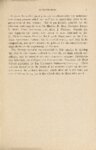
Show 10 HANDBOOK FOR TEACHERS OF INTERPRETATION psychological school of speech is comprehended in what seems at first to be a very slight factor, but which is the foundation of the entire study of speech-in placing the cause first, not the effect. Instead of the physical defi nition of time as relating to the duration, rapidity, pauses, and so mind's on, the good teacher of speech must think of time as the mental to the but as measurement; not as to weight or importance, distance between one idea and another; then drills in reading for a time will "not train us to read slowly," as Mr. Clark so pertinently says, "(anyone can do that), but to think largely." The teacher of speech must not conceive quality of voice as mani festing harshness, anger, secrecy, and so on, but rather that various emotional states affect the 'muscles, causing a change in the size, shape, and texture of the speech organs, and thus produce variations in kind of voice. The instructor who hears the variations of pitch, inflections, "discrete," concrete, or any such mechanics, will get nothing more than mechanics from the pupil in return. But the instructor who is able to analyze mind's motive in the student's reading, will be able to change and develop that student's ability, to express himself more accurately, by directing the pupils' attention to the cause rather than to the effect of pitch. S. H. Clark. Professor S. H. Clark, more carefully than any of his predecessors, worked out the psychology of speech. No one unless he comprehends can be a good teacher of interpretation as they are explained vocal criteria of four the expression thoroughly in the first half of Mr. Clark's book, How to Teach Reading. One must not only have studied this book, but must have woven the principles therein into the very fiber of his mental machine, so he will at once automatically recognize the causes, which have produced In this day, simple, direct, clean cut, elegant, the speech 'effect. forward efficiency is the speech ideal, as contrasted with the straight ideal of the mid-nineteenth century period of big voice, fine sounding words, rhetorical phrasing, grandiloquent gesture, and pompous posing. Criteria. In the evolution from Rush to Clark, abruptness, the fifth division made by the former has been discarded, because it is Voice may not a separate division, only a subdivision of force. mechanical school and the modern |