| OCR Text |
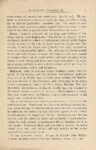
Show HANDBOOK FOR TEACHERS OF INTERPRETATION 4 mostly actors-taught elocution, compiled dictionaries, and prefaced these dictionaries with rather 'mechanical rules for delivery. Thomas Sheridan urged, by writing and lecture, that the English language generally studied and practiced. He was lecturer at the Universities of London, Oxford, and Cambridge. We must account him an excellent teacher if he can be accredited with the splendid be more attainments of his son Richard. America. It was not until 1827, more than 2500 years after Corax gave the first laws of speech, that Dr. James Rush, Professor of Physiology in the University of Pennsylvania, made the first serious attempt toward a scientific explanation for the phenomenon Steele, Sheridan, and Walker in England gave crystallized, arranged, and The Rush analysis of voice into its elaborated their beginnings. elements-quality, force, pitch, time, and abruptness-may be applied to all speech, but it is significan\ that Dr. Rush applied his principles to elocution and to interpretation more than to oratory This appears to have been the first effort to place the or forensics. interpretation of the printed page on a scientific foundation. Dr. Rush very pertinently says, "The art of speaking well, has, in most civilized countries, been a mark of distinction between the elevated and the humble conditions of life, and has been immedi ately connected with some of the greatest labors of ambition and taste. It may therefore appear extraordinary, that the world, with all its works of pkilosophy, should be satisfied with an instinctive exercise of the art, and with occasional examples of its supposed perfection, without an endeavor to found an analytic system of instruction, productive of more multiplied instances of success." Rush's Theory. So enthusiastic was Dr. Rush over his recog nition of the component elements of the human voice, that he was of oral some expression. vague contributions, but Dr. Rush 3 sure that if his numerous and elaborate divisions and subdivisions of quality, force, pitch, time, and abruptness, discrete and concrete, thirds and fifths be earnestly practiced, anyone could have a beauti ful, cultured, speaking voice, and would speak and read artistically. Advancement. and 3 The \ two great universities in America-Yale Harvard, soon had instructors who were pupils of Dr. Rush. James Rush, The Human Voice-J, Crissy, Printer, 1845. |