| OCR Text |
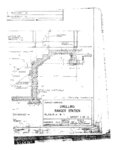
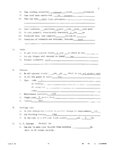
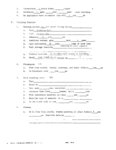
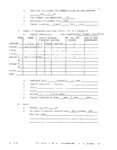
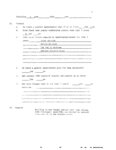
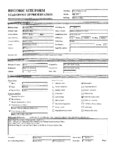
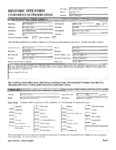
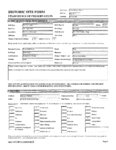
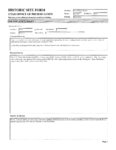
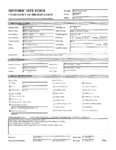
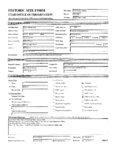
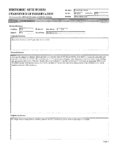
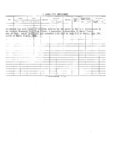
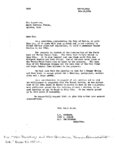
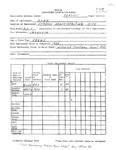
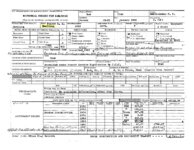
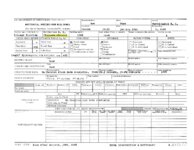
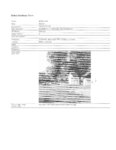
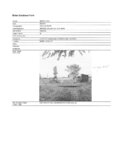
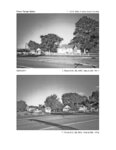
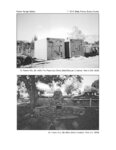
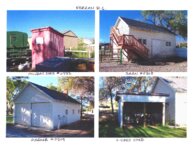
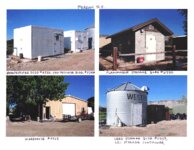
Show HISTORIC SITE FORM Site Name UTAH OFFICE OF PRESERVATION Site No. This form provides additional information on individual buildings Building Building Information Condition Integrity ~_."_~,_"-" ,.m,.~ ILow .• i _ _ ,.",,:, IFerron Ranger Station , . --.~.,.~~.~,." o Moved? Date Moved Moved From 1",. ._". ._""_". _.,, ... L--",,,, ",,,", , IMk~495~--.J .""',', .. ".,.,---.-.~.-.-~-~",.~~-~--.,~~.~ Facility No.: IQ?g~___u_m_w>'~ .... J COIwnentsl Alterations Exterior: aluminum siding (1977); boxed eaves; porch roof covered with aluminum soffit material; egress window at basement (west); composition roof shingles (after 2004); vinyl sliding windows; awning added on west; west (rear) door replaced with 6·panel steel door. Interior: occupied did not enter. Records indicate it was extensively remodeled in 1977 Historical Overview The CCC built the house (#0205, formerly #1112) in 1936 for $3 ,710, following a modified version of the R4 Plan 1 dwelling. CCC Camp engineer L. A. Conyers recommended several changes, including the enclosure of the sun porch off the living room and the addition of a bedroom, furnace room, wash room, and drying room in the basement. The decision to install a coal-fired furnace led to the elimination of the fireplace and its adjacent built-in bookcase. When regional architect George L. Nichols inspected the site in 1936, he noted the building was 90% complete and had a bedroom, storeroom, laundry, and coal/furnace room in the basement. He also wrote, "The ECW limit on this building has not been exceeded and for this and because of the fine job that they are getting generally, we wish to congratulate the Manti." Upon completion, the dwelling had plaster walls at the basement and some halls, while the remaining walls were lined with Firtex. They were finished with plastic paint, a textured product, colored "tan with a golden tint" except at the bedrooms, which had a "pink tint." The basement walls were white and the oak floors and trim varnished. The house recei ved numerous improvements over the years. Regional architect Wilden Moffett prepared a kitchen remodeling plan in 1968 that called for replacement of the cabinets and sink, installation of additional cabinets, expansion of the dining alcove, an acoustical tile ceiling, and new linoleum. In 1977, he drew plans calling for replacement of the windows and installation of aluminum siding, soffits, fascia, gutters, and downspouts. A contractor carried out the work later that year, covering the building' S original novelty siding. Quarters agreements indicate district ranger John Niebergall was the last ranger to live in the site, remaining there until approximately 1988. The District now uses the dwelling to house seasonal employees, , Eligibility Justification Under National Register criteria, the site is eligible as a district even though some of its resources lack "individual distinction." The Dwelling, while lacking this individual distinction due to alterations, still contributes to the compound's historic character thanks to the retention of its original massing, location, setting, and association . It also plays a key part in the spatial relationship of the site's historic features . Page 3 |