| OCR Text |
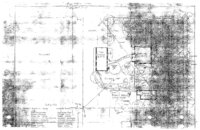
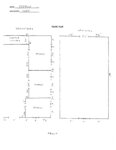
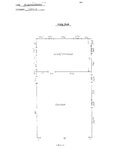
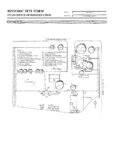
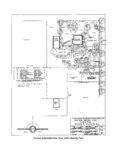
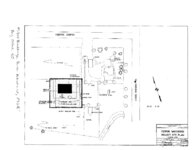
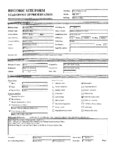
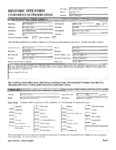
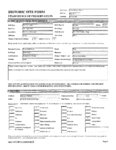
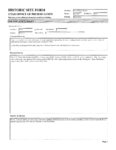
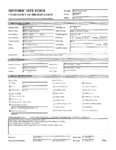
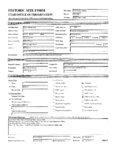
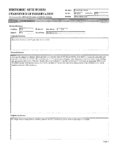
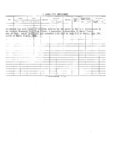
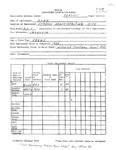
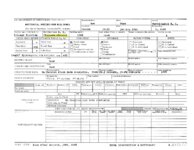
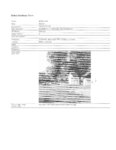
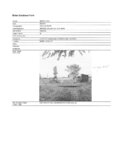
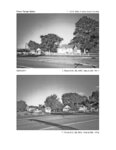
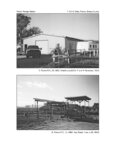
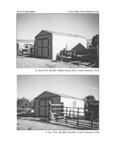
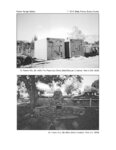
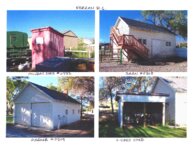
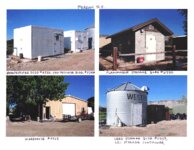
Show HISTORIC SITE FORM Site Name Site No. UTAH OFFICE OF PRESERVATION Forest L I ML-4955 Manti-La Sal National Forest '_~_'~h_~~'_~ __ "'"_"':___ '_ "Fr· ___''' ____ ' _''' ___ . . " ... ~~~ Note: This form was created to supplement the Utah survey form by providing information about the site as a whole. _, ," ~.QQ5 . , ... Large, relatively flat comer lot in a small town. The northeast comer has three historic buildings and mature landscaping while the southeast comer consists of the historic bam, corrals, and modem hay sheds. The southwest comer is more utilitarian in character with storage buildings and a "boneyard" (storage area). Pastures occupy the remaining northwest portion of the site. Important site features include the pasture, corrals, fences, sidewalks, and landscaping. The construction date of an outdoor fireplace of stone, situated in the northwest comer of the dwelling's yard, is presently unknown. Site History In late 1934, the City of Ferron offered the Manti National Forest a parcel of land (in T20S, R7E, S16) for development as a ranger station, noting it was large enough "for a dwelling, garage, bam, machine sheds and a large garden." The Forest Supervisor, recognizing the potential to develop a station and a winter CCC camp, asked the Regional Forester to keep the offer in mind as New Deal funds became available. By deed dated December 28, 1935, the Forest Service took possession of the 4.42-acresite at the southwest comer of State Street and Canyon Road (100 South). CCC enrollees, presumably from Ferron Camp F-l1, immediately started constructing buildings and, by the summer of 1936, the station had gained an R4 Plan 1 dwelling, an R4 Plan SIB office/storeroom, an R4 Plan 11 bam, an R4 Plan 21 garage/storeroom, and an equipment shed. All but the latter, which was covered with corrugated metal, had novelty siding and woodshingled roofs. They were painted white with light green roofs and Nile green trim and shutters. L. A. Conyers, an engineer with the CCC camp, suggested - and may have implemented - several modifications to the Ferron Ranger Station that were not particularly welcome. He drew up a landscaping plan that in 1936 drew criticism from Harold L. Curtiss, a landscape architect in the Regional Office. Curtiss remarked, "This plan should be drawn up in the approved form and in accordance with Regional policies and should bear the written approval of the Forest Supervisor." He recommended reducing the amount of lawn and using "a naturalistic planting of carefully selected masses of drouth [sic] resistant shrubs." Regional architect George L. Nichols found the new buildings poorly placed on site and noted , "we must carefully plan our landscaping so that we will get good screening for the buildings." This led Curtiss to develop a planting plan in 1937, relying on trees and bushes to do just that. Landscaping costs soared to $6,379.94, primarily because the alkaline sotl made it "necessary to haul in great quantities of material and do much other heavy work." Other site improvements included a one-acre pasture, a corral, concrete walks, fences, and a flagpole. Over the years, the Ferron Ranger Station lost its equipment shed but gained new buildings, while existing ones were remodeled to meet ever-changing needs. Site Eligibility (Applies to the site as a whole; refer to building forms for individual buildings) The Ferron Ranger Station is eligible for listing on the National Register as a District under Criteria A and C with Conservation, Social History, and Architecture as areas of significance. As a former district headquarters, it played a vital part in the early administration of the Manti National Forest. It is also important for its associations with the Civilian Conservation Corps, a key component of the nationally significant New Deal program. Despite some alterations, the compound retains the character-defining features required to illustrate these historic themes and portray its identity as a historic Forest Service administrative site. The period of significance begins with its construction in 1936 and ends in the late 1960s when district staff shifted to a leased office. Five of its 21 buildings are contributing reso urces: the Dwelling, Bunkhouse, Bam, Garage, and Oil/Gas Shed. The other buildings/structures are non-contributing resources. Important site features that also contribute to the site's historic character include the pasture, corrals, fences, sidewalks, and landscaping. |