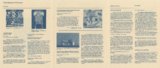
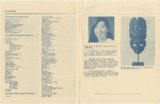
| OCR Text |
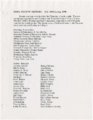
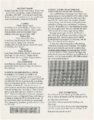
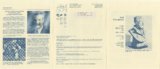
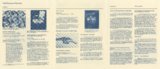
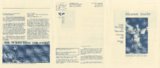
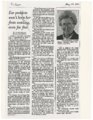
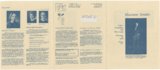
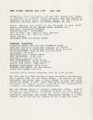
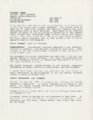
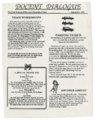
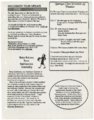
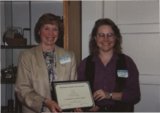
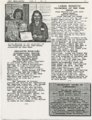
Show HIGH SCHOOL SELF-GUIDES AVAILABLE CREATING INDEPENDENT MUSEUM EXPERIENCES The Museum will provide teachers with selfguides of galleries in our permanent collection. Please xerox them for your students as needed. The following self-guides are available: To enable more groups to visit the Museum, the Museum's Educational Services encourages teachers to create their own museum experiences when guided tours are unavailable. Teachers are welcome to guide their own groups, but we request that you make a reservation for your self-guided tour with our office in advance. It is important that you call for reservations for a self-guided tour in order to prevent over crowding in the Museum. We ask that all tours bring 1 adult for every 10 students and we limit tour groups to 60 students. Afternoons (noon-5) are the best times to bring a self-guided group, since mornings are usually reserved for guided tours. Please call us at the Museum's Educational Services 581-3580 to make arrangements for a self-guided tour. African Art Oceanic Art North American Indian Art Pre-Columbian Art Chinese Art Egyptian Art Greek Art, 6th and 4th Centuries Italian Art, Renaissance French Art, 15th-18th Centuries Dutch and Flemish Art English Decorative Arts English Painting American Art Thinking About Art (the elements of art) Abstraction Ceramics Jewelry in the Museum The Human Figure Architecture at the University of Utah Ideas from teachers on self- guided tours: Pre-School - 2nd grades: -Animals: How are animals depicted in art? -Line, Shape & Color: Finding art elements. -Masks: Not just for Halloween. Self Guides available through a generous grant from the R. Harold Burton Foundation 3rd-6th grades: -The Elements of Art: A new language you can read with your eyes. -What can we learn about people by the art that they make? -Utah and American Art: Visual examples of fashions and customs in history. For every tour scheduled at the Museum, or each group of students assigned to visit the Museum, we will be happy to send you a copy of the self-guide for the area you are studying. If you are interested in receiving a copy of one or more of these guides, please call 581-3580. High School/College: -Messages of history: Symbols in art. -Power: Everyone has a status symbol. -Theater in art: Characters, stage design & costume. -Poetry and painting: Words for visual images. The Teacher Resource Center Objects from a variety of cultures, such as Africa, Egypt, China, and Mexico, are available to teachers for two week loan periods, for classroom or media center exhibits. For more details, a complete list or reservations, please contact the UMFA Educational Services. 581 -3580 Due to an increased demand for the TRC, we request that you make reservations for objects that you'd like to check out. Walk- ins or same day requests cannot be accommodated. Come up with ideas of your own. Let us know your ideas, comments or suggestions. We'd love to hear from you. Write us .... Utah Museum of Fine Arts, Educational Services, University of Utah, 101 Art and Architecture, SLC, Utah 84112. (801) 581-3580 2 the School, Youth and Family Programs Department. As an adjunct instructor at New York City Community College Ms. Brown taught courses on the Arts of Africa, Oceania and the New World as well as introductory Art History Survey. She is currently writing her thesis for Master's Degree in Anthropology/ Certificate in Museum Studies at New York University. Secondary Teachers Workshop Registration Form ~ ~ :Photography and Poetry: !Manuel Alvarez Bravo :secondary Teachers Workshop , Although born and raised in New York City, Ms. Brown moved West to Spokane, Washington and took the position of Curator of Education at the Museum of Native American Cultures. She worked closely with the Native American Community and produced an in-service television course for teachers on Plateau Cultures which reached all of Washington, Alaska, Idaho, Northern Oregon and Western Montana. NAME:_ _ _ _ _ _ _ _ _ _ _ _ __ ADDRESS:_ _ _ _ _ _ _ _ _ _ _ __ CITY/STATE/ZIP:_ _ _ _ _ _ _ _ _ __ HOME PHONE:_ _ _ _ _ _ _ _ _ _ __ GRADE/SCHOOL:_ _ _ _ _ _ _ _ _ __ DISTRICT:_ _ _ _ _ _ _ _ _ _ _ __ SCHOOL PHONE:._ _ _ _ _ _ _ _ _ __ Frida Kahlo, Manuel Alvarez Bravo, Gelatin Silver Print Photography and Poetry: Manuel Alvarez Bravo CAREERS IN ART- DEADLINE: January 22, 1993 BERNADETTE BROWN- SECONDARY EDUCATORS WORKSHOP! This workshop is FREE OF CHARGESponsored by American Express Company. Open to secondary teachers only. Space is limited to the first 30 who register. Mail your registration early! Saturday, February 6, 1993 8:30 a.m.-4:00 p.m. FREE OF CHARGE (Limit: 30 teachers) SPONSORED BY THE AMERICAN EXPRESS COMPANY Conducted by Bruce Hucko, photographer, art educator and co-founder of the "Children's Photographic Workshop." I I I I I I I I I I L---------------------------------------------~ Revelaciones: The Arts of Manuel Alvarez Bravo The Utah Museum of Fine Arts is pleased to present an exhibition of 113 photographs by Manuel Alvarez Bravo. At, 89, Bravo is one of the undisputed masters of 20th Century photography. Born in Mexico City in 1902, Bravo has spent his life in Mexico. For nearly 70 years he has photographed the land and people of Mexico, poetically framing the sensual and the violent, the ancient and the new. The black-and-white photographs in the exhibition reveal his roots in both Mexican history-- with it's ancient allusions and symbols-and in European art history, particularly Surrealism. The exhibition includes several portraits including one of noted artist and painter Frida Kahlo, wife of Diego Rivera. Revelaciones is made possible by a grant from the American Express Company and will be on display in the Thomas Gallery, at the Utah Museum of Fine Arts, from January 17-March 7, 1993. This day-long workshop will be a model for presenting concepts related to the photography, language and poetry of the Manuel Alvarez Bravo photography exhibition in your classroom. The objective of this workshop is to foster the use of the museum by secondary educators from multi-disciplines, with a specific goal of training teachers in how to guide their own groups through the Bravo exhibition. Using the Polaroid instant camera, participants will be able to make photographs based on the workshop themes, to write about and discuss them and to create a model for similar classroom instruction. Teachers who participate in this workshop will receive free registration, lunch, camera, film, teaching packet, and a scholarship for bus money to bring students to the Museum to visit the Bravo exhibition.· Teachers who participate in the workshop will be required to bring their students to the Museum. Space is limited to the first 30 teachers who register. 3 Curator of Education Utah Museum of Fine Arts Ms. Brown's experiences as an educator in museums demonstrate the many challenges offered by such a career. Among requirements for such a position Ms. Brown lists writing and research skills and the ability to understand and respond to people and their needs and interests. A Curator of Education has the responsibilities of program development for all ages, recruitment, training and supervision of volunteer guides or docents, design of out-reach and traveling exhibit programs, creation and publishing of educational materials, budget management, and grant writing. "People and cultures as they are revealed in art and artifacts have always fascinated me!" This is how Bernadette Brown, new Curator of Educational Services at the Utah Museum of Fine Arts, explains her combined studies in anthropology and art. She views the role of educator in an art museum as a position having many challenges and an abundance of variety. Ms. Brown says she was interested in archaeology as a teenager. At Hunter College her sophomore courses introduced her to classical archaeology, and from there she broadened her interests to anthropology of Native Americans and the New World, then to the art of Egypt, the Near East and finally to modern art. Ms. Brown likes the Western United States and turned down jobs in Eastern States to come to Salt Lake City. In Spokane she enjoyed working with the "people who get things done", rather than the many layered bureaucracy she dealt with in New York City. She likes the people here, finds them "friendly and being themselves, rather that trying to impress." "I am looking forward to working with the 'doers' in art education in connection with my work with the Utah Museum of Fine Arts!" When Ms. Brown completed her BA in Anthropology with a minor in Art History/Archaeology she knew she wanted to work in a Museum. Faced with a choice of positions in the American Museum of Natural History or the Brooklyn Museum she chose the Brooklyn Museum because of the educational philosophies of the director. From 1964 to 1988 Ms. Brown was Coordinator of Interns in 4 |