| OCR Text |
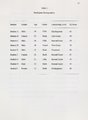
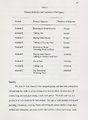
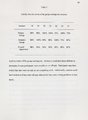
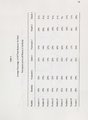
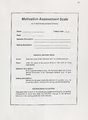
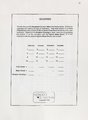
Show 16 participants had Intellectual Quotients (IQ scores) in the intellectual disability range and were performing significantly below grade level in math skills (see Table 1). Eight of the nine participants were qualified for special education services under the intellectual disability label. Student C differed from the rest ofthe participants in that his classification for special education services was autism. Student A and Student F were both served in an English as a Second Language (ESL) program because they were Hispanic children with English being the second language spoken in the home. Therefore, their IQ scores were from a nonverbal measure. Student F had Down syndrome and Student I had myotonic muscular dystrophy. They were both able to do a majority ofthe same activities as the peers in their self-contained class. The 9 participants were assigned to two different groups, one consisting of 5 members and one consisting of 4 members. They were assigned to these groups based on the results of a functional assessment. Students with the same identified function of problem behavior were placed in the same group. Setting and Materials The study took place in a classroom for elementary aged children with intellectual disabilities. Each group of students was assigned to sit at a separate cluster of desks to help them recognize that they were working in groups to earn their reward. The sessions took place during a seatwork period. Students completed math seatwork that was at a practice level for each participant. This work included number identification, counting objects, single digit addition and subtraction, and double-digit addition and subtraction with and without regrouping. |