| OCR Text |
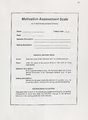
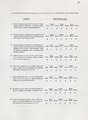
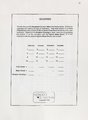
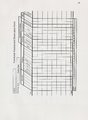
Show 12 behavior management should move from a more aversive approach to a more nonaversive, positive approach. They list functional assessment as one of the important components of a positive approach to behavior management. A complete fimctional assessment involves three strategies: informant methods, direct observation, and fiinctional analysis (O'Neill et al., 1997). Informant methods include talking to the individual or others who know the individual best and using questionnaires and rating scales. Informant methods should provide information on the social context for the problem behavior, the nature ofthe problem behavior, and the reaction that the problem behavior evokes from others (Carr et al., 1994). Direct observation requires that the individual be observed in normal activities, whether at home, school, or work. The observation should not be intrusive and should allow the individual to participate normally in daily routines. The person observing records when a problem behavior occurs, along with the antecedent, the consequence, and their perception of what is motivating the behavior (O'Neill et al., 1997). Observing the individual over a period of time and comparing observation data to information gathered fiom informant methods allows the observer to determine if there is a pattern in the problem behavior and if a clear function (the motivation for the problem behavior) exists. The third component of a functional assessment is to conduct an experimental or functional analysis. Functional analysis allows the investigator to manipulate variables that may be involved in the problem behavior (O'Neill et al., 1997). Carr et a1. (1994) refer to this step as verification of the information learned in the other steps |