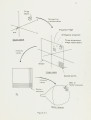
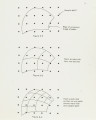
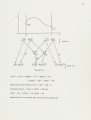
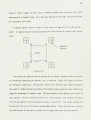
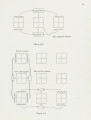
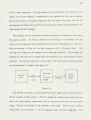
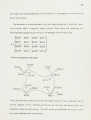
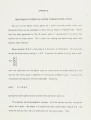
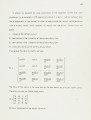
| OCR Text |
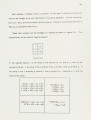
Show 51 1. The subdivider. 2. The stack. 3. The tester. 4. The shader. The subdivider can split the patch into four pieces. Since subdividing a cubic takes three adds, the number of adds to subdivide a bicubic component is 30. The values must travel through the edges to the center so the values must pass through four adders. The fastest possible implementation would have a subdivider for each component. There are several ways of trading off speed with cost. One subdivider could be used to subdivide each component sequentially. The system would just run slower. In addition, since each subdivider can be broken up into modules that combine register-squares, one could use just one module and give it two register-squares at a time to get a new square. Then the system would run even slower. A stack would be needed to push the new squares onto. It needs to be large enough to handle the maximum level of subdivision, probably no greater than 15. The tester must decide whether to display the patch or subdivide. It would check the x and y values at the corners. In addition, it may sort the four new patches if necessary either for the Newell algorithm or to do transparency. It is possible at some level of recursion to determine that no more sorting needs to be done. |