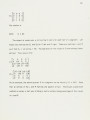
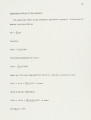
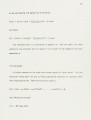
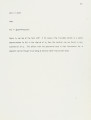
| OCR Text |
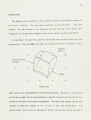
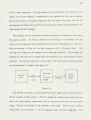
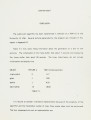
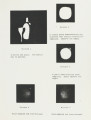
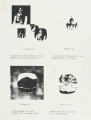
Show CHAPTER ONE INTRODUCTION A method for creating shaded pictures of curved surfaces is presented in this report. A motivation for the method is that we wish to produce high quality computer-generated images of surfaces and curved solid objects on a raster-scan output device. We would not only like the images to accurately represent the surfaces we choose but in addition we would like control over shading and texture. There has already been significant research directed toward these ends, especially on the hidden-surface [1,2] and shading [3,4] aspects of the problem. All such methods must must address the questions of how to model objects and then how to render them. Polygons, and sometimes quadric patches, are used to model objects in current shaded-picture methods. There are some difficulties with using these simple pieces to model or approximate free-form curved surfaces. Approximation with polygons gives a faceted effect and a silhouette made up of straight-line segments. Quadric patches [5,6], while smooth in appearance, are not suitable for modelling arbitrary forms, since they don't provide enough degrees of freedom to satisfy slope continuity between patches. There are two significant methods used for reducing or eliminating the undesirable visual effects that occur when polygons are used to approximate curved surfaces. The first method for getting rid of the faceted effect is that of Henri Gouraud [3]. With |