| OCR Text |
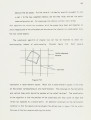
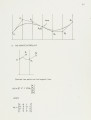
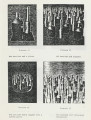
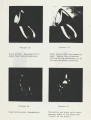
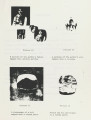
Show 2 this method a scalar light intensity value is associated with each vertex of a polygon. Gouraud does linear interpolation of the intensity value between vertices and then subsequently across scan-lines. If adjoining polygons have the same intensities at the common vertices then this method yields continuous shading across the surface; however, the first derivative of the shading is discontinuous. Gouraud's method has been implemented by different groups making shaded-pictures. It is a simple and successful method but has a few shortcomings: the discontinuity of the derivative is noticable (the "Mach band effect"), it is difficult to do highlights, the shading is affected by the orientation of the polygon in the picture, and the silhouette is still made up of straight-line segments. The second method developed to improve the appearance of the polygon approximation is that of Phong [4]. Since current methods of generating intensities for polygon surfaces include calculating a surface normal at the vertices, Phong decided to interpolate the entire surface normal vector between vertices and edges instead of the scalar intensity values that Gouraud used. This yields a normal at every display point which can be used to calculate the intensity. Although this normal may not be the mathematically correct one, it is close enough to use for intensity and highlight calculations. As Phong has noted, although there is still a discontinuity in the first derivative of the shading, the discontinuity is smaller than for Gouraud's method and hence less noticeable. Phong's method has been used to make some visually attractive photographs, but the problem of straight-line segments at the silhouette still remains. Curved surface segments or "patches" can be used instead of polygons to model free-form curved surfaces. If such patches can be joined together with slope |