| OCR Text |
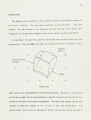
Show 3 continuity across the boundaries then a picture of a surface can be made to appear "smooth" both in shading and at the silhouette. For patches to be useful in modelling a curved surface, techniques must be found for describing and manipulating the patches and for connecting them together with slope continuity across boundaries. One such patch is the bicubic patch, which is widely used (see Appendix A). Most of the ideas in this report will be applied to the bicubic patch, but this is not intended to imply a limitation on generality. Generating pictures of curved patches requires techniques for I) establishing a correspondence between points on the surface and the elements of the display raster, 2) removing hidden or, more generally, the "not seen" parts of patches, and 3) calculating light intensities to be displayed on the raster. Chapter two will deal with the first item: it will present a technique for establishing the correspondence between points on the surface and the raster elements, Chapters three and four will describe a specific method for quickly making the correspondence when bicubic patches are used. Chapter five will deal with item two: it will discuss the "hidden-surface" problem for patches. Item three -- calculating light intensities -- will be discussed in chapters six and seven. |