| OCR Text |
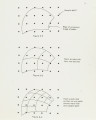
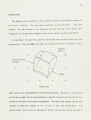
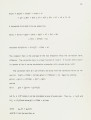
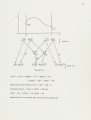
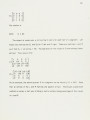
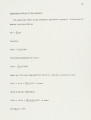
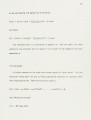
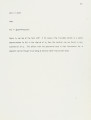
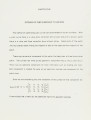
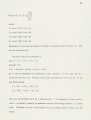
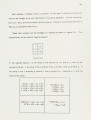
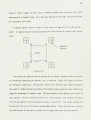
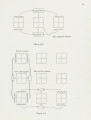
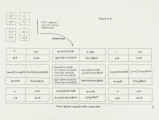
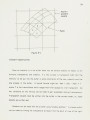
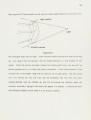
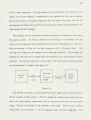
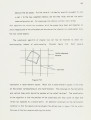
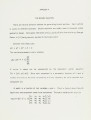
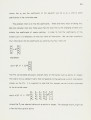
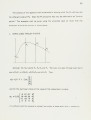
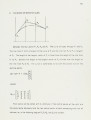
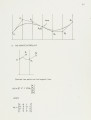
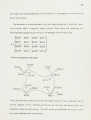
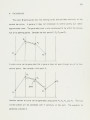
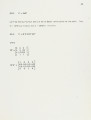
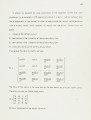
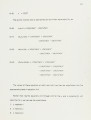
Show 15 (3-3) gn(t) - [gn(t+hn) + gn(t-hn)]/2 Therefore: (3-4) f(t) [f(t+h) +. f(t-h)]/2 - [gn(t+h) + gn(t-h)J/2. Equation (3-4) is the subdividing difference equation for a cubic and equations (3-2) and (3-3) are used to get the right correction term as hn is made smaller by powers of two. Equations 3-2, 3-3, and 3-4 can be expressed diagrammatically as as shown in figure 3-5. At each end point there are two values -- the values of the function and the correction term. Those values can be put into two registers. The contents of the registers for the midpoint can be found by the indicated combination of the registers at the endpoints. In order to subdivide one of the new halves it is necessary to update . the correction term at the end points since hn will be half as big and the correction terms are functions of hn. In terms of the diagram in figure 3-1, the subdivision process cascades downward. The correction terms are functions of the level of subdivision. The initial values in the registers can be found by solving f(t) and go(t). Since n=O then h2... 1 and f(O)=d, go(O)=b, f(1)=a+b+c+d, and go(1)=3a+b. It may be useful sometimes to compute the derivative. The derivative can be found as a simple function of the endpoints and a correction term that is dependent only upon the depth of subdivision. Instead of adding f(t+h) and f(t-h), subtract them: |