| OCR Text |
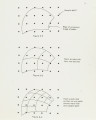
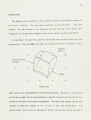
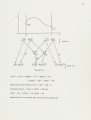
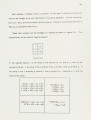
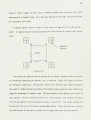
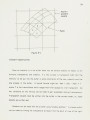
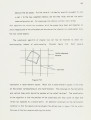
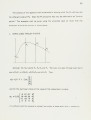
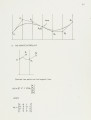
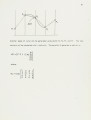
Show 37 of the intensity as a function I(u,v) where I references a picture. In keeping with the bicubic method, the picture does not need to be rectangular but can have edges that are cubic curves. In practice the above method for getting intensities from pictures can fall afoul of sampling errors. This will occur when the number of points to be displayed on a patch is less than the number of elements in the stored picture, resulting in less information being put on the patch than is in the picture. One way to alleviate this is to map areas onto areas rather than points onto points. Every time the patch is subdivided, the picture is also subdivided. When the algorithm determines that a subpatch is to be displayed, the corresponding area on the picture is known. The average intensity of that area can be found and used as the intensity of the piece. While this reduces considerably the sampling problem it does not completely solve it. The sampling problem can be better understood by considering figure 6-l. Suppose that the algorithm subdivides the patch up as shown and that the squares in the figure represent raster-element squares. Since in general the pieces of the patch do not mesh well with the raster grid there will be times when more than one piece of the patch logically belongs to one display element, ie., pieces a, b, and c would be painted in element one. However, a, b, and c are not usually created in time sequential order so combining them would be difficult. If only one of the pieces is chosen for display then some information would be lost. A solution to the problem is presented in chapter Seven. |