| OCR Text |
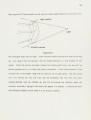
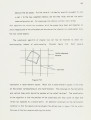
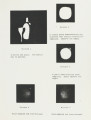
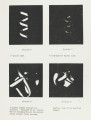
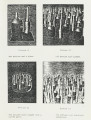
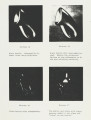
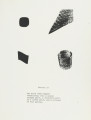
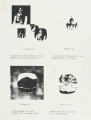
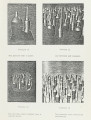
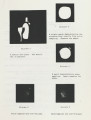
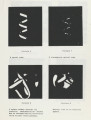
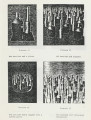
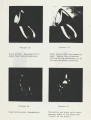
Show 41 surface. As noted previously, a raster display cannot produce images of sharp edges or small detail. Aliasing occurs because we are sampling an image ' which has information that the raster-display cannot possibly reproduce. The phenomenon of aliasing can be better understood by considering a stagecoach movie. Note first that a movie camera can sample the real world 24 times a second. Suppose the camera views a stage coach as it starts and accelerates; the wheels moving faster and faster. Most readers will have witnessed that when the coach begins to move, the wheel appears to rotate in the right direction but as the wheel rotates faster it appears to go backwards, then stop, and finally to rotate forwards again even though the coach is always moving forwards. It is easy to understand that the wheel has a frequency of rotation. The movie film can accurately reproduce a rotational frequency of not more than twelve spokes per second. As the wheel rotates faster than that, the higher frequency is "aliased" as a low frequency which can be reproduced. The analog with sampled images is that an image may have intensity undulations that vary faster than the sampling rate and hence alias themselves as undulations that can be reproduced. The field of signal-processing helps us understand aliasing even better. If a two-dimensional fourier transform of an image is taken prior to sampling, the result is a "picture" of the frequencies present in the image. Sharp edges and small objects 1. This image we are sampling exists only as a high resolution description in the computer, as contrasted with an actual photograph. |