| OCR Text |
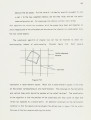
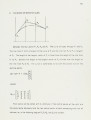
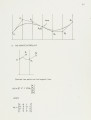
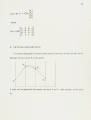
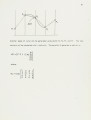
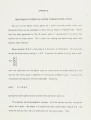
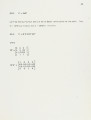
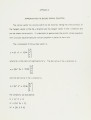
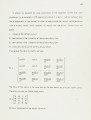
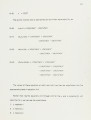
Show 47 so that subdivision continues first with the more distant subpatch. If the z-buffer is used and the order is wrong, then the error will show up only at the silhouette where a staircase effect might become visible. A large frame-buffer will be needed for the area-averaging algorithm. At every raster-element, storage will be needed for two intensities, I) and 12, area, a facing direction bit, and a patch code. If the algorithm is used in conjunction with the z-buffer then storage for z is also needed. We shall describe values already in the buffer as "old" and the new values to be written as "new." The area of a single raster-element square will be taken to be unity so that is the largest value that can be stored in the area part of the raster-element. Initially I) will have the background intensity, the area bits will contain one's and the patch code will be zero. The area-averaging algorithm is: A new piece is found with its area, code, direction bit, and intensity value which is weighted by the area. Then its corresponding raster-element is retrieved. The following are the possibilities. 1. If the new code is the same as the old and the direction bits are the same then the pieces come from the same patch. Add the areas and the new weighted intensity to the old value in I). 2. If the two codes are the same and the direction bits are different then the silhouette has been encountered and the accumulated area from that patch is about to be obscured by the new and subsequent pieces. Set the area to be the new area, the intensity I) to be the new weighted intensity, and the direction bit to the new direction value. 3. If the codes are different then a new piece or pieces will partially or completely |