| OCR Text |
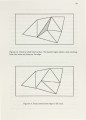
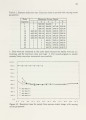
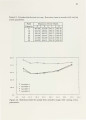
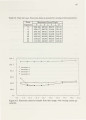
Show 50 In the case of the subdivided. node, the time is I t, = L(niR + T) , (5.2) i=l where I is the number of octants searched. In the case where only one octant is searched ( I = 1 ), the subdivision is strictly beneficial, since n1 ~ n. Considering the values of I from 2 to 4, substituting n - ~~ for n1 and pulling constant terms out of the summation, I t, = Tl + R(nl- L~i) · (5.3) i=O The break-even point is where t = t, : l ·nR + T = Tl + R(nl- L~i) · (5.4) i=O This can be solved for n, giving the result (5.5) This value for n indicates that when T > R, it is not most efficient to subdivide octree nodes when n < (T / R), because ~}:.\)' ~ 0. This was verified through the use of the operating system program profiling utilities. The node to node traversal time, on average, was more than 10 times the average triangle intersection test time. The empirical data seem to match this analysis well, as the best performance was obtained when the node capacity was in the range of 15 to 20. The test cases provide important information to consider in the use of octrees for ray tracing. If the traversal time from one octree node to another is larger than the time to intersect a primitive object with a ray, low values of the octree node capacity parameter can actually increase the total ray intersection time. The longer duration of a box to box traversal can make it economical to perform several triangle intersection tests in a given node of the octree. However, these results also point out the importance of fast methods for travel from a node to one of its neighbors in the octree scheme. |