| OCR Text |
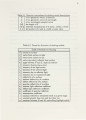
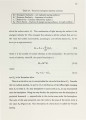
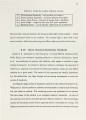
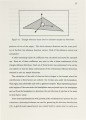
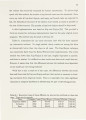
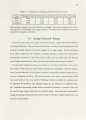
Show Table 2.5. Terms for incident radiosity solution. T, Total Incident Radiosity- net incident on surface i D, Direct Incident Radiosity - incident radiosity from lights G ij Geom. Form Factor - fraction of energy from j reaching i Wi Area Weight- weight for the area that point represents Vij Blocking Factor - 1 if P, directly visible from P;, 0 otherwise 17 This provides a solution based on the initial incident light on the surfaces- which can be calculated based on any method. The incident light is then used in the matrix solution, effectively performing the diffuse reflections of the initial state. 2.10 More General Radiosity Methods Immel et al. attempted to solve Equation 2.8 using different techniques (20] . While Kajiya uses stochastic sampling methods to calculate illumination, Immel et al. use subdivision of surfaces and reflection solid angles to establish a large system of equations. In contrast to previous radiosity techniques, the approach of Immel et al. approach is a solution for directional radiosity values, not just diffuse radiosity for a given patch. The results of this approach are visually impressive, but the method has very large storage and processing requirements to solve the system of equations. A voiding the large system of equations required by the method of Immel et al., Wallace et a.l. did not perform a radiosity solution based on surfaces and directions, but just based on surfaces. The rendering process was performed in two phases. The first phase of the solution is an emergent radiosity calculation. As part of this solution, form factors included specular reflection behavior. The second phase renders the first phase results with an approach which is essentially ray tracing. The difference between this method and the previously described ray tracing techniques |