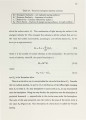
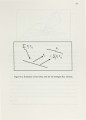
| OCR Text |
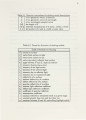
Show 11 visible to each other and 1/r2 otherwise, where r is the distance between points x and x'. t:(x,x') is an emittance term for energy emitted by the surface at point x' which reaches point x. S is the union of all surfaces in the environment. p is the unoccluded three point transport reflectance from x" through x' to x. Kajiya's results from this method were impressive, and included color bleeding effects and the generation of caustics. Unfortunately, Kajiya reported that the method required vast computer processing time. While at present path tracing seems impractical, it is very promising in its broad coverage of optical behavior. One nice feature of path tracing is that there is no n2 storage requirement, as is the case with radiosity methods. 2.9 Diffuse Reflection Radiosity Solutions Radiosity techniques have been used for calculating the luminance [18,9,10,20,36] or illuminance [26] at points on surfaces in an environment. The term luminance is used here as the flux of light emerging from a surface, while the term illuminance is taken as the flux of light impinging on a surface. The structures of the solutions for luminance and illuminance are generally similar, but each solution offers certain features. 2.9.1 Solution for Emergent Radiosity Several studies have presented methods for calculating the flux of light of a given wavelength range emerging from a surface [18,9,10]. The models are based on the emission and reflectance of light in a scene described by a set of ideal diffuse (Lamberti an) polygons. Table 2.4 defines terms used in the following discussion. The premise for the radiosity method is that the light striking a surface Si is linearly attenuated according to the constant reflectivity of the surface, r, (Figure 2.2). The attenuated light is reflected back out into the environment, in addition to light |