| OCR Text |
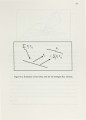
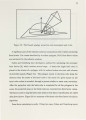
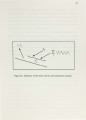
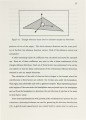
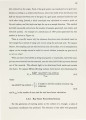
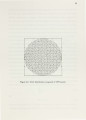
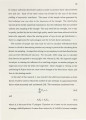
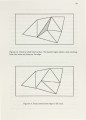
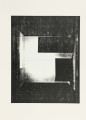
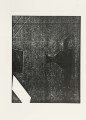
Show 33 space of the surface, which is a quick operation. This method provided smooth radiosity interpolation, but had serious drawbacks. Because Shepard's method does not reproduce planar data, undulating radiosity values resulted. Local radiosity values resulted in visible and unnatural bumps in the radiosity values of the larger region. After unsuccessful experiments with different parametric distance norms for this method of interpolation (e.g., distance-squared or distance to the fourth power), it was abandoned. 4. 7.2 Crack Closing The interpolation problem for emission values is analogous to a problem that arises in adaptive surface subdivision. The problem in surface subdivision is avoiding cracks or holes in surfaces when the adaptive subdivision levels of neighboring regions of a surface do not match. This is shown in Figure 4.3. A solution to this problem is to constrain the point that does not match a neighboring edge to be located on the neighboring edge [7]. While this is an arbitrary constraint on the data, it guarantees that the resulting interpolant will be C0 • Figure 4.4 shows an example of how the constraint works. While the constraint method is usually used for surface crack prevention, it was used here to guarantee good behavior from the radiosity interpolant. Information was extracted from the surface subdivision software, to keep track of where vertex radiosity values had to be constrained to guarantee C0 continuity of the radiosity interpolant. This involved tagging a vertex as having a radiosity value dependent on other vertex radiosity values, and storing references to the other vertices. After the radiosity solution was calculated for the triangle areas, radiosity values were calculated for the independent vertices first. Then, dependent vertex radiosity values were calculated as linear combinations of the other vertex values. |