| OCR Text |
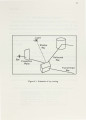
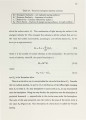
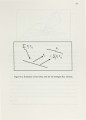
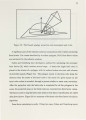
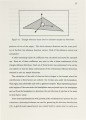
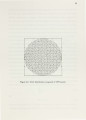
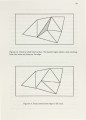
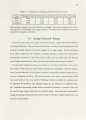
Show 26 4.5 Form Factor Calculations For the radiosity solution, it was necessary to calculate approximate values for the geometric form factors. The practical definition of the form factor Fi; is the percentage of the light leaving from the polygon j that reaches the surface of polygon i. Sampling methods were employed to approximate this value, and sample ray starting point and direction distributions were generated carefully to avoid any sampling correlation effects. One distribution was used to calculate the sample ray directions, while another was used to determine the starting point of the sample ray. 4.5.1 Ray Direction Distribution The N usselt analog for form factors was the basis for the sampling scheme. To calculate a vector of form factors, first a hemisphere was placed on a selected surface area, Si. Another surface area Si was spherically projected onto the hemisphere surface. The result on the hemisphere was then projected 'vertically' down onto the first surface Si, creating an area on the disc under the hemisphere. According to the Nusselt analogy, the value of Fii was the area of this second projection. The sampling technique that calculated form factors by ray tracing was based on inverting the process of projection onto a hemisphere and then onto a disc. Instead, the disc was represented by a number of sample points, which were projected up to the hemisphere and outward to determine form factors. Because many sample rays were sent out to generate the form factor approximations, an efficient method for calculating sample ray directions was implemented. When a triangle was to be sampled, three perpendicular unit vectors were calculated to provide a reference frame on the triangle, as shown in Figure 4.1. The first reference direction was the direction of one edge of the triangle. The second reference direction was the normal to the triangle (calculated by taking the cross |