| OCR Text |
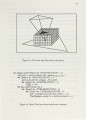
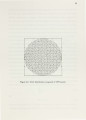
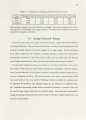
Show 22 of solving the ray intersection problem in the context of this thesis, and will be discussed in more detail in Chapter 5. 3.4 Spatial Enumeration While octrees provide an adaptive subdivision of space, other methods are based on a uniform subdivision of space, and are referred to as spatial enumeration techniques [35,15]. These methods start with a bounding box the same way the octree method does, but instead of an adaptive subdivision of the bounding box, a uniform three-dimensional grid is placed in the bounding box. This approach does not provide the same kind of adaptation to the data that the octree does, but does provide a useful advantage. The regular structure of the grid in the spatial enumeration method allows the use of incremental techniques for box to box traversal, which execute quickly[39,15]. 3.5 Ray Classification The ray intersection problem is really a search, given a ray start point and direction, for the nearest surface. Arvo presented ray classification as a method for solving the problem (3]. With this technique, a ray's start point and its direction were considered as a point in five dimensions. The five-dimensional space is the . cartesian product of ft3, corresponding to the ray start point, with 52 , containing the orientation of the ray. Arvo described the lazy construction of a five-dimensional tree which is used to sort ray queries and return small candidate sets for actual ray intersection testing. From empirical results, Arvo claimed a factor of roughly 13 speed increase over Gla.Ssner's octree timings, and a factor of roughly 4.2 speed increase over Kay and Kajiya's reported timings for a single test image. It is worth noting that the timings were taken from different machines running completely different software. |