| OCR Text |
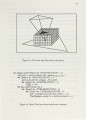
Show 19 [1,13,12] is that z-buffers were used as much as possible to speed up any hidden surface processing. In other words, a z-buffer was used to solve the first level of ray /object intersections, then a low resolution z-buffer was used for the reflection directions where the specular reflection is significant. The results from shading secondary z-buffers are weighted according to the bidirectional specular reflectance as ~ function of the individual sample directions. The approach of Wallace et al. is quite similar to the approach developed in this thesis (which was developed independently). There are a few distinctions between the two. The method of form factor calculation presented in this thesis relies more heavily on ray tracing, where the methods based on the hemi-cube can use scan conversion. This thesis works on triangles derived from B-spline surface subdivision and surface approximation. Additionally, this thesis demonstrates the generation of caustics as part of the illumination solution. |