| OCR Text |
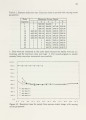
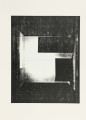
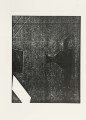
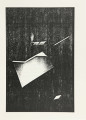
Show 2 Some of the faults of early ray tracing and radiosity approaches are addressed, bringing some of the features of each into a single method. Radiosity methods are used for an improvement over most ray tracers which do not take indirect illumination into account. This thesis also presents an improvement over radiosity techniques that, until recently, failed to consider anything but ideal diffuse reflection behavior. Models consisting of triangles derived from B-spline surfaces are used with the shading method developed in this thesis for several test cases. Since the radiosity solution has an n2 storage requirement, tests of this method have been limited to roughly 2000 triangles. Care has been taken so that the polygonal surfaces derived from curved surface representations are shaded smoothly, without inappropriate shading discontinuities. The next two chapters contain descriptions of related research in shading models and ray intersection techniques. Chapter 4 describes the shading model implementation. Chapter 5 contains some empirical results on using octrees for fast ray tracing and Chapter 6 shows some timings of three different ray intersection techniques. Chapter 7 treats results from this shading method implementation, and Chapter 8 contains some conclusions and comments on future work. |