| OCR Text |
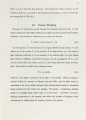
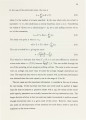
Show CHAPTER 4 SHADING METHOD IMPLEMENTATION This chapter discusses specific implementation details of the shading method. The model for reflection of light at a surface is described first, because that is part of two separate stages of the algorithm: the form factor calculation and the ray tracing of the final image. A general description of the rest of the algorithm forms the remainder of the chapter. 4.1 Reflection Model Description As is common in computer graphics, the shading model was based on boundary representations of objects, with no participatory media. The behavior of light at surfaces was treated as a linear combination of diffuse and specular behavior. This treatment was an approximation: more complex reflection characteristics as described by Cook in [14] were not implemented. If a surface was transparent, the Fresnel reflection law was used to determine the reflected and refracted attenuations. Fresnel reflection coefficients were not calculated for opaque objects: the value of F, in that case was taken to be the identity. Summarizing, the intensity calculation IS (4.1) where i is the intensity result, lJ is the diffuse radiosity of the object, k, measures of specular reflectivity of the object, F, is the Fresnel reflection coefficient, 8i is the angle of incidence, i, is the intensity from a reflected ray, and it is the intensity from a transmitted (refracted) ray. |