| OCR Text |
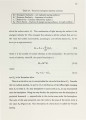
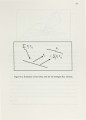
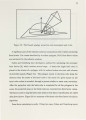
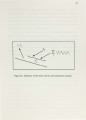
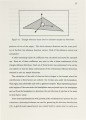
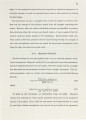
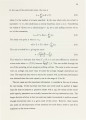
Show 7 where 0. = the angle between the line of sight and the reflection vector. Phong claimed his method was not necessarily justified by physics. His approach to highlights, however, matches relatively closely to recently published research based on electromagnetics [4]. 2.4 Torrance-Sparrow Model To better approximate observed reflectivity, Blinn used the work of Torrance and Sparrow to derive the value of k. from physical models of surfaces [5]. Blinn developed functions to calculate the value of k$ from the unit normal vector, the unit direction to the light, the unit direction to the point of view, the index of refraction of the material, and the facet slope distribution parameter of the material. This made specular highlights more accurate, especially for materials with a rough surface microstructure. The equation for the Torrance-Sparrow model is the same as equation 2.5 in section 2.3 above, with additional parameters for calculating k •. 2.5 Cook and Torrance Model Cook and Torrance treated the reflectivity r as a function of the angle of incidence, and used different reflectivity values for diffuse and specular light [14]. The formulation, also known as Cornell Shading, is (2.6) where k. and ktl are constrained to sum to 1, and dw takes into account the solid angle of the light source subtended by the visible area of a surface. This approach brings out striking differences in the reflection characteristics of different materials, especially in avoiding a plastic-like appearance for objects. |