| OCR Text |
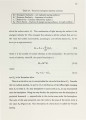
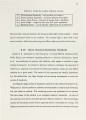
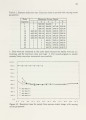
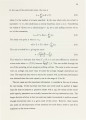
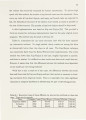
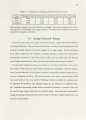
Show 10 techniques. 2. 7 Distributed Ray Tracing Cook established methods using random sampling techniques which brought a large group of optical effects into the domain of ray tracing [13,12]. By using controlled techniques to alter parameters of rays being traced, several effects were produced, as listed ·in Table 2.3. While distributed ray tracing techniques are valuable, there are some optical effects that are not achieved with this approach. Color bleeding and caustics are prime examples. 2.8 Path Tracing After modeling the shading problem as an integral equation, Kajiya developed a shading technique called path tracing [23,22]. This powerful technique used Markov chains and variance reduction to solve for illumination based on the following equation: I(x,x') = g(x,x')[t(x,x') + lsp(x,x',x")l(x',x")dx'1 · (2.8) In the equation, l(x, x') is the unoccluded two point transport intensity from x' to x. g(x, x') is a geometry and occlusion term, which is 0 if the points are not directly Table 2.3. Summary of distributed parameters and the effects produced. Parameter Distributed Effect Produced Reflection Ray Directions Fuzzy Reflections Transmission Ray Directions Translucency Shadow Ray Directions Penumbras Primary Ray Starting Points Depth of Field Ray Times Temporal An tialiasing |