| OCR Text |
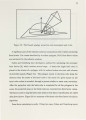
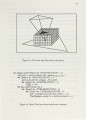
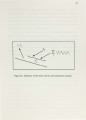
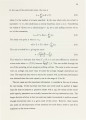
Show 30 by using a uniformly distributed random number to produce three values between zero and one. Each of the three values was divided by the sum of the three, yielding a barycentric coordinate. The mean of the sample values generated by this technique was very close to the barycenter of the triangle. The distribution was not given further numerical examination, but this technique does not produce uniform area sampling of the triangle. This may seem like an oversight, but it may be partly justified by the fact that high quality results have been achieved with the hemi-cube approach, where the starting points of rays do not get distributed - there is a single point for each polygon used for its form factor calculation. The number of sample rays that must be used to calculate well-behaved form factors is critical in determining whether ray tracing is practical for calculating form factors via sampling. An algorithm relying on ray sampling to calculate form factors must provide well-behaved solutions. For example, while using rays to calculate form factors (as opposed to tracing light with volumes [1,19]), this approach might be subject to missing the influence of an emitting polygon on another polygon, as might also occur with the hemi-cube algorithm. Minor changes in viewing or the positioning of objects must not cause undue changes in the form factor values, and thus in the shading results. At the start of this research, it was intended that additional constraints on form factors would be used to reduce the number of rays necessary to approximate form factor values accurately and consistently [18]. The constraints considered were L" ii; = 1, (4.4) j=l and (4.5) where Ai is the area of the ith polygon. Equation 4.4 is based on the conservation of energy, while Equation 4.5 comes from reciprocity of visibility between triangles. |