| OCR Text |
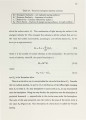
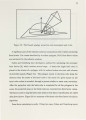
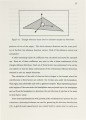
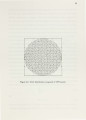
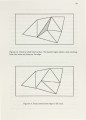
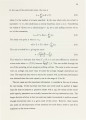
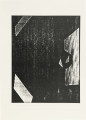
Show 28 side centered on the origin. Each of the grid points was translated in its grid coordinates according to a uniform distribution, where the width of the distribution was half the distance between rows of the grid. If a grid point remained inside the unit circle after being jittered, a third coordinate was calculated to create a point on the unit sphere, and the triple was kept for use as a sample direction. This method provided reasonable control over the number of samples generated, was simple, and executed quickly. An example of a distribution of. 1967 points generated by this method is shown in Figure 4.2. There is a specific reason why the reference directions were calculated based on the triangle data instead of using unit vectors along the principal axes. For opaque objects, the sampling rays are directed away from the surface, over a hemispherical region, so the triangle normal is useful to control whether a sample ray goes out of or into an object. When an object was labeled as being transparent or translucent, half of the sample rays were directed into the material, and the other half of the rays were directed out of the material. This allowed light to be distributed both inside and outside the object. For opaque diffuse-reflecting surfaces, form factors were determined by F. .. _ L:~·t ray ...strike? (ray, surfacei) IJ-n,. av• where ray...strike?(ray, surface)= { 0 1 if surface is the first surface struck by ray, otherwise and n,.av• is the number of rays used for each form factor calculation. 4.5o2 Ray Start Point Distribution (4.2) (4.3) For the generation of starting points on the surface of a triangle, a table of barycentric coordinates was produced. The elements of this table were generated |