| OCR Text |
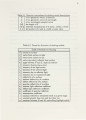
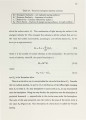
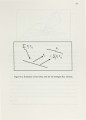
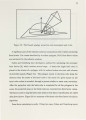
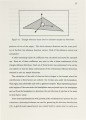
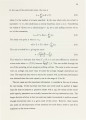
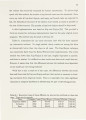
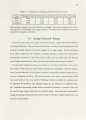
Show 4 where u_1 ( x) is the unit step function. Conventions for vector notation, as de· scribed in Table 2.1, are used in the following descriptions, as well as terms that are summarized in Table 2.2. 2.1 Cosine Shading Equation 2.2 describes an early formula for intensity calculation (6]. In this model, surfaces are ideal diffuse reflectors and light sources are points which radiate uniformly in all directions. Shadows are not taken into account. (2.2) In the equation, i is the intensity of the light reflected by the surface, r is the reflectivity of the surface, i, is the intensity of the light source, ka is the ambient light reflection coefficient, ja is the intensity of the ambient light, kd is the diffuse light reflection coefficient (considered constant over all wavelengths), N is a unit normal outward from the surface, and Lis a unit vector from the surface toward a light. The method is called cosine shading because N · L = cos(B1), (2 .3) where 91 is the angle of incidence of the light to the surface. When a polygon's normal is fixed (in contrast to Phong's approach [28]), and the light source is considered to be at an infinite distance, this shading model results in intensities being constant over the surface of a polygon. This result - evaluating a shading model on a polygon basis rather than on a pixel basis - provides a saving in shading computation in the common case where the number of polygons under consideration is smaller than the number of pixels to be shaded. |