| OCR Text |
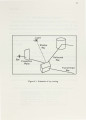
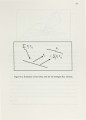
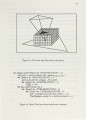
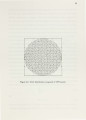
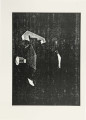
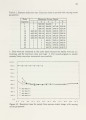
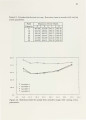
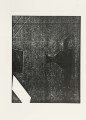
Show 39 by the number of nodes to be visited, which is 0( d8df3 ). Given the relationship between d and nt, the algorithm under these assumptions is O(nt log8 (nt)). 5.3 Octrees with Varying Parameters Significant variations in the speed of the octree execution were found based on parameters used to determine the shape of the octree. The maximum depth constraint and the node capacity for each node of the octree were varied in an attempt to tune the octrees for good performance. Small sections of images were used as test cases, because many test cases were desired, and it was expected that computing full images would not change the results significantly. \Vhile small sections of images were used for testing, geometric subdivision and supersampling filtering were performed as with full-scale images. A resource utilization measurement function of the operating system was used to generate timing values. The timing values were found to be consistent to within approximately two percent under varying loads on a multiuser system. Standard ray tracing illumination models as per Whitted [38] were used for the ray intersection timing tests; radiosity techniques were not used in the ray tracing timing tests. The first test case was a part of an image of an espresso maker placed on a flat surface with a fiat surface reflecting from above (Figure 5.1 ). The section of the image used for testing was five pixels tall, extending from the middle of the left border of the image to the center of the image. The model contained 2695 triangles after subdivision from spline surfaces. Figure 5.2 and Table 5.1 show the results of timing the ray tracer execution with different octree parameters for maximum depth a.nd node capacity. The timing values are ray intersection and shading times, in seconds. The times do not include the time used to set up the data structures, because the data structure initialization time is usually much smaller than the time spent performing ray intersections. |