| Title |
Interviews with Japanese in Utah: Grace Oshita |
| Alternative Title |
Grace Oshita: interviews on February 20, 21 and 26, 1985, and May 22 and 30, 1985 |
| Creator |
Oshita, Grace Fujimoto, 1925- |
| Contributor |
Kelen, Leslie G., 1949- |
| Publisher |
Digitized by J. Willard Marriott Library, University of Utah |
| Date |
1985-02-20; 1985-02-21; 1985-02-26; 1985-05-22; 1985-05-30 |
| Date Digital |
2014-05-07 |
| Access Rights |
I acknowledge and agree that all information I obtain as a result of accessing any oral history provided by the University of Utah's Marriott Library shall be used only for historical or scholarly or academic research purposes, and not for commercial purposes. I understand that any other use of the materials is not authorized by the University of Utah and may exceed the scope of permission granted to the University of Utah by the interviewer or interviewee. I may request permission for other uses, in writing to Special Collections at the Marriott Library, which the University of Utah may choose grant, in its sole discretion. I agree to defend, indemnify and hold the University of Utah and its Marriott Library harmless for and against any actions or claims that relate to my improper use of materials provided by the University of Utah. |
| Spatial Coverage |
San Francisco, San Francisco County, California, United States, http://sws.geonames.org/5391959/ ; Topaz Camp, Millard County, Utah, United States, http://sws.geonames.org/5548582/ |
| Subject |
Oshita, Grace Fujimoto, 1925- --Interviews; Japanese Americans--Utah--Interviews; Japanese Americans--Forced removal and internment, 1942-1945; Central Utah Relocation Center |
| Description |
Transcript (typescript, 174 pages) of a series of interviews with Grace Oshita, a Japanese-American living in Utah in 1985. Mrs. Oshita (b. 1925) speaks of her early life in San Francisco, her father's business ventures, and the Japanese relocations of World War II. Her family was interned at the Topaz, Utah, relocation center |
| Type |
Text |
| Genre |
oral histories (literary works) |
| Format |
application/pdf |
| Language |
eng |
| Rights |
 |
| Relation |
http://archiveswest.orbiscascade.org/ark:/80444/xv45901 |
| Scanning Technician |
Matt Wilkinson |
| Conversion Specifications |
Original scanned with Kirtas 2400 and saved as 400 ppi uncompressed TIFF. PDF generated by Adobe Acrobat Pro 9 for CONTENTdm display |
| ARK |
ark:/87278/s6j4099m |
| Topic |
Japanese Americans; Evacuation and relocation of Japanese Americans (United States : 1942-1945); Central Utah Relocation Center |
| Is Part of |
Aileen H. Clyde 20th Century Women's Legacy Archive |
| Relation is Part of |
Mitsugi M. Kasai Memorial Japanese American Archive |
| Setname |
uum_ijau |
| ID |
897992 |
| Reference URL |
https://collections.lib.utah.edu/ark:/87278/s6j4099m |
| Title |
Page 159 |
| Format |
application/pdf |
| Setname |
uum_ijau |
| ID |
897981 |
| OCR Text |
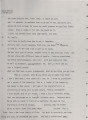
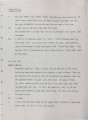
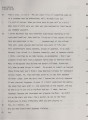
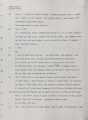
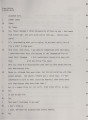
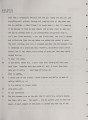
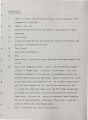
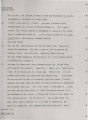
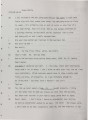
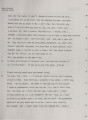
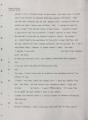
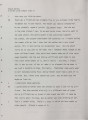
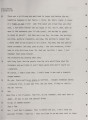
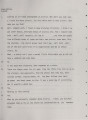
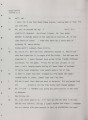
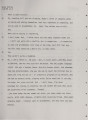
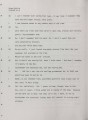
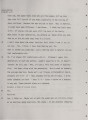
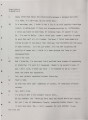
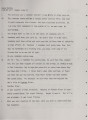
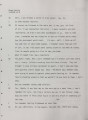
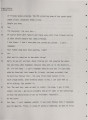
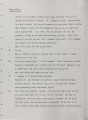
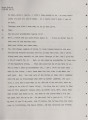
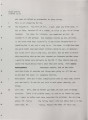
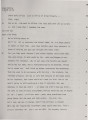
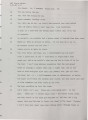
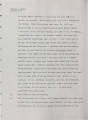
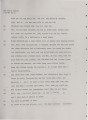
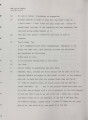
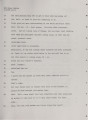
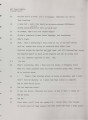
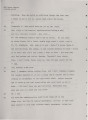
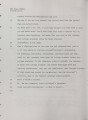
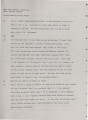
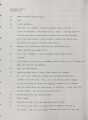
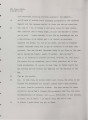
Show OHI Grace Oshita 5-30-85 s2:36 swing a golf club. Or you know, ah, sit around and visit. And - um, so he - he went hiking every day for hours. He would take a little sack lunch with him, you know, and go into that area that! toldyou. You know, east of the residence of Topaz. And hike around. And hunted for arrow heads and thingsjust so he could build him self physcially. Beucase once he started the business, he said, he could not hire all the help he wanted. Back home, he was the boss. Just sat in theoffice. And made contacts with the other business. But this time, it was he who had to go into the factory and do the work. So, he was determined to get himself ready physically. LK Yes. What didyou think you wouldbe doing when you left camp. GO I was going tohelp him. iNas goingtobe his secretary-bookeeper. LK SO you wereirr some way in training too. GO That's right. LK You know, with your job. GO You know. Theprocess for themiso making ah included using small trays, separating the rice and handling it three times a day - so that the yeast wouldbe activated evenly in each grain of rice. In order to do that, they put one scoopful in each tray. And so - these trays had to be covered with a grass mat. Especially in making the yeast to activateinto the rice. Now, this yeast making was -a very~ecial process.Back home, hey used to just send for it. To Japan. Theybought it from Japan. But now,they had to make this -the yeast itself. Andsoin order to do that, they needed the mat. They dampaed the mat and covered each tray with it. So that the u |
| Reference URL |
https://collections.lib.utah.edu/ark:/87278/s6j4099m/897981 |