| Title |
Interviews with Japanese in Utah: Grace Oshita |
| Alternative Title |
Grace Oshita: interviews on February 20, 21 and 26, 1985, and May 22 and 30, 1985 |
| Creator |
Oshita, Grace Fujimoto, 1925- |
| Contributor |
Kelen, Leslie G., 1949- |
| Publisher |
Digitized by J. Willard Marriott Library, University of Utah |
| Date |
1985-02-20; 1985-02-21; 1985-02-26; 1985-05-22; 1985-05-30 |
| Date Digital |
2014-05-07 |
| Access Rights |
I acknowledge and agree that all information I obtain as a result of accessing any oral history provided by the University of Utah's Marriott Library shall be used only for historical or scholarly or academic research purposes, and not for commercial purposes. I understand that any other use of the materials is not authorized by the University of Utah and may exceed the scope of permission granted to the University of Utah by the interviewer or interviewee. I may request permission for other uses, in writing to Special Collections at the Marriott Library, which the University of Utah may choose grant, in its sole discretion. I agree to defend, indemnify and hold the University of Utah and its Marriott Library harmless for and against any actions or claims that relate to my improper use of materials provided by the University of Utah. |
| Spatial Coverage |
San Francisco, San Francisco County, California, United States, http://sws.geonames.org/5391959/ ; Topaz Camp, Millard County, Utah, United States, http://sws.geonames.org/5548582/ |
| Subject |
Oshita, Grace Fujimoto, 1925- --Interviews; Japanese Americans--Utah--Interviews; Japanese Americans--Forced removal and internment, 1942-1945; Central Utah Relocation Center |
| Description |
Transcript (typescript, 174 pages) of a series of interviews with Grace Oshita, a Japanese-American living in Utah in 1985. Mrs. Oshita (b. 1925) speaks of her early life in San Francisco, her father's business ventures, and the Japanese relocations of World War II. Her family was interned at the Topaz, Utah, relocation center |
| Type |
Text |
| Genre |
oral histories (literary works) |
| Format |
application/pdf |
| Language |
eng |
| Rights |
 |
| Relation |
http://archiveswest.orbiscascade.org/ark:/80444/xv45901 |
| Scanning Technician |
Matt Wilkinson |
| Conversion Specifications |
Original scanned with Kirtas 2400 and saved as 400 ppi uncompressed TIFF. PDF generated by Adobe Acrobat Pro 9 for CONTENTdm display |
| ARK |
ark:/87278/s6j4099m |
| Topic |
Japanese Americans; Evacuation and relocation of Japanese Americans (United States : 1942-1945); Central Utah Relocation Center |
| Is Part of |
Aileen H. Clyde 20th Century Women's Legacy Archive |
| Relation is Part of |
Mitsugi M. Kasai Memorial Japanese American Archive |
| Setname |
uum_ijau |
| ID |
897992 |
| Reference URL |
https://collections.lib.utah.edu/ark:/87278/s6j4099m |
| Title |
Page 27 |
| Format |
application/pdf |
| Setname |
uum_ijau |
| ID |
897849 |
| OCR Text |
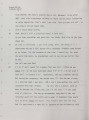
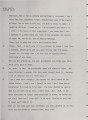
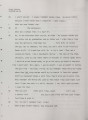
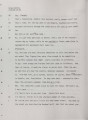
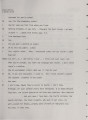
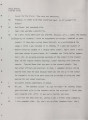
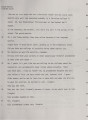
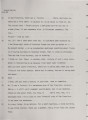
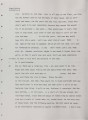
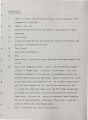
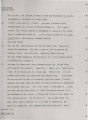
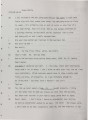
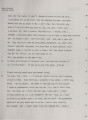
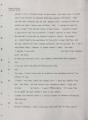
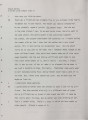
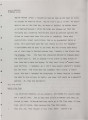
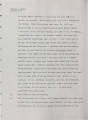
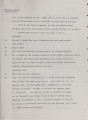
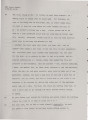
Show Grace Oshita 2-20-85 s5:26 L Except for the Blacks. They were not immigrants. GO Probably, it seems to me they could have been. In all probability. L Blacks? GO Not Blacks. But everybody else. L Yeah, that wouldbe a possibility. GO SO I don't think there were any problems. Because, well, I guess the Japanese [as]majority of students I think we enjoyedmore priveleges, compared to other schools. If they had a spring dance festival, or a performance m the stage, I think I was included in it. Whereas if I were one student of -where-a minority student in a largely white school, !don't think I would have been chosen to participate. So I remember the little ballet numbers that I did. Or my being elected secretary of the school in the Student Body. We had regular monthly meetings, school meetings with committee reports. Theymn'thave that any more in the present schools. They had school officers and election. In fact, I remember using a voting machine even that far back because there was one set up in the school for the~blic to use so we were given the privelege of using the same machine for our school elections. L So youfelt pretty comofrtable in school. GO Oh, yes. The Japanese custom - ah, was followed-- Ah. Parents always gave christmas gifts to the teachers and to _the principal. I think they were showered with gifts. It was just a custom, you know. L I could see how they would be, seeing it was a pretty large community. GO I also remember older- No, she's not an older Japanese Nisei. She's |
| Reference URL |
https://collections.lib.utah.edu/ark:/87278/s6j4099m/897849 |