| Title |
Interviews with Japanese in Utah: Grace Oshita |
| Alternative Title |
Grace Oshita: interviews on February 20, 21 and 26, 1985, and May 22 and 30, 1985 |
| Creator |
Oshita, Grace Fujimoto, 1925- |
| Contributor |
Kelen, Leslie G., 1949- |
| Publisher |
Digitized by J. Willard Marriott Library, University of Utah |
| Date |
1985-02-20; 1985-02-21; 1985-02-26; 1985-05-22; 1985-05-30 |
| Date Digital |
2014-05-07 |
| Access Rights |
I acknowledge and agree that all information I obtain as a result of accessing any oral history provided by the University of Utah's Marriott Library shall be used only for historical or scholarly or academic research purposes, and not for commercial purposes. I understand that any other use of the materials is not authorized by the University of Utah and may exceed the scope of permission granted to the University of Utah by the interviewer or interviewee. I may request permission for other uses, in writing to Special Collections at the Marriott Library, which the University of Utah may choose grant, in its sole discretion. I agree to defend, indemnify and hold the University of Utah and its Marriott Library harmless for and against any actions or claims that relate to my improper use of materials provided by the University of Utah. |
| Spatial Coverage |
San Francisco, San Francisco County, California, United States, http://sws.geonames.org/5391959/ ; Topaz Camp, Millard County, Utah, United States, http://sws.geonames.org/5548582/ |
| Subject |
Oshita, Grace Fujimoto, 1925- --Interviews; Japanese Americans--Utah--Interviews; Japanese Americans--Forced removal and internment, 1942-1945; Central Utah Relocation Center |
| Description |
Transcript (typescript, 174 pages) of a series of interviews with Grace Oshita, a Japanese-American living in Utah in 1985. Mrs. Oshita (b. 1925) speaks of her early life in San Francisco, her father's business ventures, and the Japanese relocations of World War II. Her family was interned at the Topaz, Utah, relocation center |
| Type |
Text |
| Genre |
oral histories (literary works) |
| Format |
application/pdf |
| Language |
eng |
| Rights |
 |
| Relation |
http://archiveswest.orbiscascade.org/ark:/80444/xv45901 |
| Scanning Technician |
Matt Wilkinson |
| Conversion Specifications |
Original scanned with Kirtas 2400 and saved as 400 ppi uncompressed TIFF. PDF generated by Adobe Acrobat Pro 9 for CONTENTdm display |
| ARK |
ark:/87278/s6j4099m |
| Topic |
Japanese Americans; Evacuation and relocation of Japanese Americans (United States : 1942-1945); Central Utah Relocation Center |
| Is Part of |
Aileen H. Clyde 20th Century Women's Legacy Archive |
| Relation is Part of |
Mitsugi M. Kasai Memorial Japanese American Archive |
| Setname |
uum_ijau |
| ID |
897992 |
| Reference URL |
https://collections.lib.utah.edu/ark:/87278/s6j4099m |
| Title |
Page 29 |
| Format |
application/pdf |
| Setname |
uum_ijau |
| ID |
897851 |
| OCR Text |
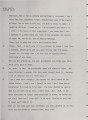
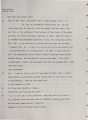
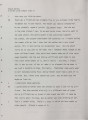
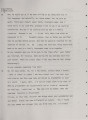
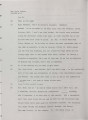
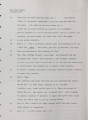
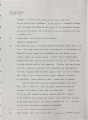
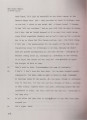
Show Grace Oshita 2-20-85 s5:28 L Was your father. Your father sounds like when you were growing up, he wasn't very accessible to you, he wasn't around very much. For you. Was your grandmother the one who was with you most of the time. GO I would say so. He would come home for dinner. L Are JApanese men - do they have less to do with ~eir kids usually than the women .. GO I think it is that way, ahuh. It's true. I think Japanese ways are that wives "job 11 is to raise the children. So, yes. Just recently, some of the mothers invited thestudents that I tutor from Japan - they mention. Thisis a conversation class. Sathe subject, I said, What shall we talk about end side five begin side six Andmothers mention,- Well, I asked. Are you the boss of the house. And do you have more authority as a mother to your children. They say, well most of the raising is left to the mothers so. Because, even now, the Japanese father in Japan work long hours and some of them - say, their commuting time could be one to two hours every day. When theycome home very late. In fact, the question I ask, is, do you epxect your husband to come home every night. And they said, oh yes. L In Japan or here. GO In Japan. L I heard too that many women do not expect their husbands to come home every night. Or that it's not that unusual. |
| Reference URL |
https://collections.lib.utah.edu/ark:/87278/s6j4099m/897851 |