| Title |
Interviews with Japanese in Utah: Grace Oshita |
| Alternative Title |
Grace Oshita: interviews on February 20, 21 and 26, 1985, and May 22 and 30, 1985 |
| Creator |
Oshita, Grace Fujimoto, 1925- |
| Contributor |
Kelen, Leslie G., 1949- |
| Publisher |
Digitized by J. Willard Marriott Library, University of Utah |
| Date |
1985-02-20; 1985-02-21; 1985-02-26; 1985-05-22; 1985-05-30 |
| Date Digital |
2014-05-07 |
| Access Rights |
I acknowledge and agree that all information I obtain as a result of accessing any oral history provided by the University of Utah's Marriott Library shall be used only for historical or scholarly or academic research purposes, and not for commercial purposes. I understand that any other use of the materials is not authorized by the University of Utah and may exceed the scope of permission granted to the University of Utah by the interviewer or interviewee. I may request permission for other uses, in writing to Special Collections at the Marriott Library, which the University of Utah may choose grant, in its sole discretion. I agree to defend, indemnify and hold the University of Utah and its Marriott Library harmless for and against any actions or claims that relate to my improper use of materials provided by the University of Utah. |
| Spatial Coverage |
San Francisco, San Francisco County, California, United States, http://sws.geonames.org/5391959/ ; Topaz Camp, Millard County, Utah, United States, http://sws.geonames.org/5548582/ |
| Subject |
Oshita, Grace Fujimoto, 1925- --Interviews; Japanese Americans--Utah--Interviews; Japanese Americans--Forced removal and internment, 1942-1945; Central Utah Relocation Center |
| Description |
Transcript (typescript, 174 pages) of a series of interviews with Grace Oshita, a Japanese-American living in Utah in 1985. Mrs. Oshita (b. 1925) speaks of her early life in San Francisco, her father's business ventures, and the Japanese relocations of World War II. Her family was interned at the Topaz, Utah, relocation center |
| Type |
Text |
| Genre |
oral histories (literary works) |
| Format |
application/pdf |
| Language |
eng |
| Rights |
 |
| Relation |
http://archiveswest.orbiscascade.org/ark:/80444/xv45901 |
| Scanning Technician |
Matt Wilkinson |
| Conversion Specifications |
Original scanned with Kirtas 2400 and saved as 400 ppi uncompressed TIFF. PDF generated by Adobe Acrobat Pro 9 for CONTENTdm display |
| ARK |
ark:/87278/s6j4099m |
| Topic |
Japanese Americans; Evacuation and relocation of Japanese Americans (United States : 1942-1945); Central Utah Relocation Center |
| Is Part of |
Aileen H. Clyde 20th Century Women's Legacy Archive |
| Relation is Part of |
Mitsugi M. Kasai Memorial Japanese American Archive |
| Setname |
uum_ijau |
| ID |
897992 |
| Reference URL |
https://collections.lib.utah.edu/ark:/87278/s6j4099m |
| Title |
Page 15 |
| Format |
application/pdf |
| Setname |
uum_ijau |
| ID |
897837 |
| OCR Text |
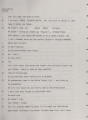
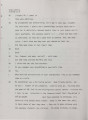
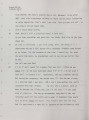
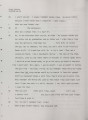
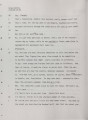
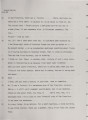
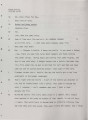
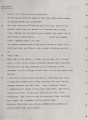
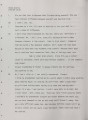
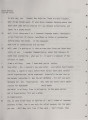
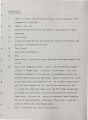
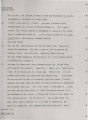
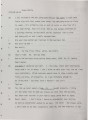
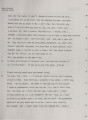
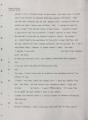
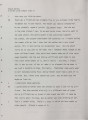
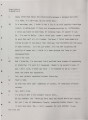
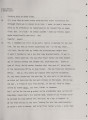
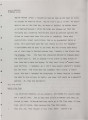
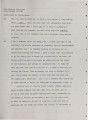
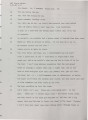
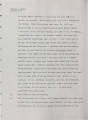
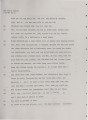
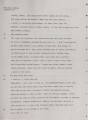
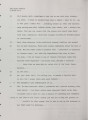
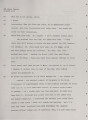
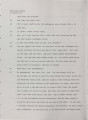
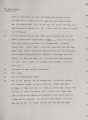
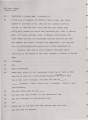
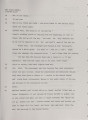
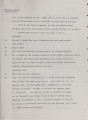
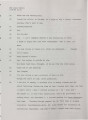
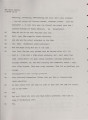
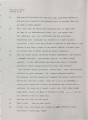
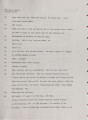
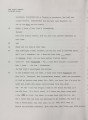
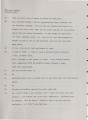
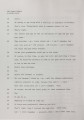
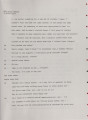
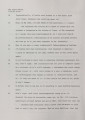
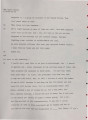
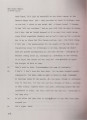
Show Grace Oshita 2-20-85 s~:14 L Where did you grow up. In what part of San Francisco. GO Japan town. L Japan town? GO Yes, the house is still there. When I was born, we were living in a residence above a retail store. My grandfather, at that time, was operating the factory on Jackson Street. I'm trying tothink of the address and I can't remember. On Jackson Street, on the 300 block. And also, a retail -a grocery store rightin Japan 'town. That building is still there, across from Japan Cultural Center on Post St. The 1600 block. And, above that was just - Well, the whole upstairs was ah home. So we lived~ there when I was born. Andwe lived there until I was- I guess just before I started to go to public school. And we lived at 2063 Bush Street. And lived there until evacuation. It was a rented flat. L Was that in Japan town,too? GO Yes. That's only two blocks up north of Post Street. L What do you remember about the area, the· way it looked. Japan Town. GO It was an old area of San Franicsco. Because it was the - Thepart that was not burnt out by the earthquake. It was an older - the older home still there - structures. I don't know when the Japanese families started moving into this area because during the time my grandparents came, ah, I think most Japanese lived in China Town. What they call, the downtown area. L So soon after that, they began movingmto this area. |
| Reference URL |
https://collections.lib.utah.edu/ark:/87278/s6j4099m/897837 |