| OCR Text |
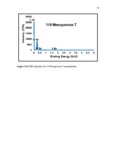
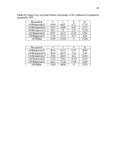
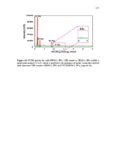
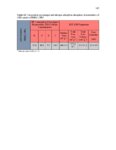
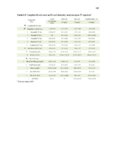
Show APPENDIX B HIGH RESOLUTION VS. LOW RESOLUTION XPS DATA XPS spectra are quantified in terms of peak intensities and peak positions. The peak intensities measure how much of a material is at the surface, while the peak positions indicate the elemental and chemical composition. For calculating atomic concentration from high resolution region scans, we need to use a peak fitting software such as CasaXPS to obtain the intensities of the XPS peaks that we are interested in. The key feature of these percentage atomic concentrations is the representation of the intensities as a percentage, that is, the ratio of the intensity to the total intensity of electrons in the measurement. Once we have these intensities for the elements, we need to normalize them via dividing area under the curve (counts per second) by relative sensitivity factor (a set of relative sensitivity factors are necessary for transitions within an element and also for all elements, where the sensitivity factors are designed to scale the measured areas so that meaningful atomic concentrations can be obtained, regardless of the peak chosen); for example this factor for Si 2p is 0.817 and for O 1s is 2.93. In other words, first, we need to divide them by X-ray flux if we have used different X-ray energies for different spectra (more X-rays will give higher intensity XPS peaks). Next, we should divide them by the photoionization crosssection for the core level. This tells us the probability that a photoelectron will be emitted, and is different for each atomic core level at each photon energy. When the data are |