| OCR Text |
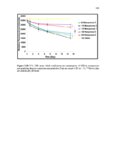
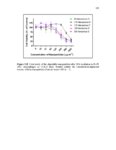
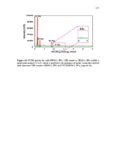
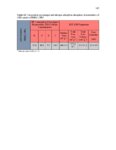
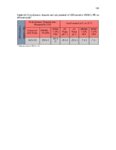
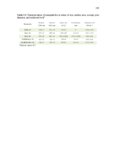
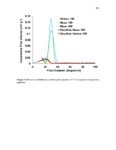
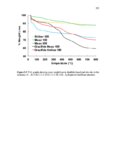
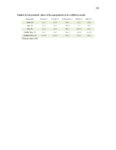
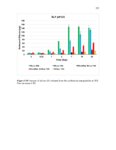
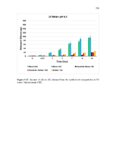
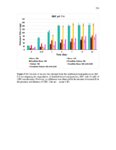
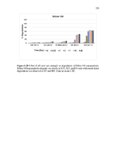
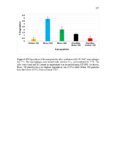
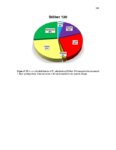
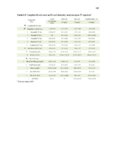
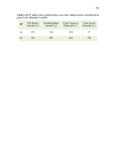
Show 220 surface area of the particles is higher such as in the case for Meso 100 and Meso 500 nanoparticles, more than 80% degradation is observed in SLF, SIF, and SBF after 28 days. In Figures 5.15-5.21, degradation percentages of SiO2 NPs over time are shown based on the amount of Si that was added to each at the beginning of the experiments. As demonstrated in Figure 5.15, maximum ca. 8.7% of the particles degraded after 28 days at pH 1.2. Figure 5.16 shows that Meso 100 and Meso 500 particles degrade up to ca. 100% in SLF while the maximum degradation for Stöber 100 particles is ca. 7% which implies the role of nanoparticle porosity and surface area: Stöber 100 (37 m2 g-1), Meso 100 (1027 m2 g-1), and Meso 500 (950 m2 g-1). For Disulfide Hollow 100 and Disulfide Meso 100 particles, the percentages were ca. 59% and 19%, respectively. As shown, Disulfide Hollow 100 nanoparticles showed ca. 3.1 times higher degradation (Pvalue< 0.05) than Disulfide Meso 100 particles. This could be attributed to their thin shell thickness (~10-15 nm) which can be broken easily in the medium, particularly in redox environment. In DI water (Figure 5.17), Meso 100 and Meso 500 particles degraded up to 71% and 55%, respectively, after 28 days. However, the other three particles did not degrade to the same extent (ca. 17% for Disulfide Hollow 100 nanoparticles). Figure 5.18 indicates the importance of medium composition in degradation of the nanoparticles. As illustrated, with the same pH as DI water, all particles degraded to a higher degree in SIF after 28 days, up to 46% (Stöber 100), 100% (Meso 100), 87% (Meso 500), 55% (Disulfide Meso 100), and 79% (Disulfide Hollow 100). In SBF (Figure 5.19), there is a synergistic effect of high ionic strength and basic condition (Table 5.3). The highest degradation occurs in SBF for all the particles. In the first 6 h, the degradation of the particles was as follows: Stöber 100 (6%), Meso 100 (51%), Meso 500 (41%), Disulfide Meso 100 (13%), and Disulfide Hollow |