| OCR Text |
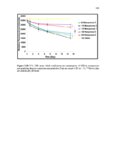
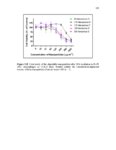
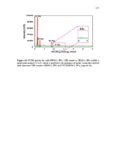
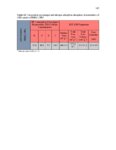
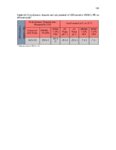
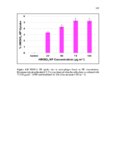
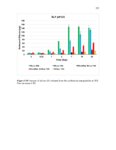
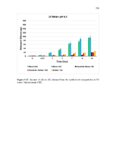
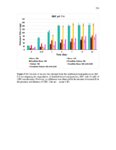
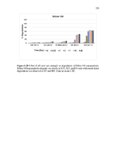
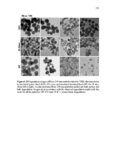
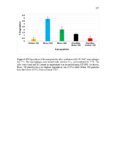
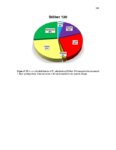
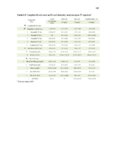
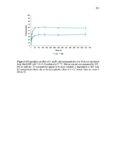
Show 229 To elucidate the influence of pH and ionic strength, the degradation kinetics of Stöber 100 and Meso 100 particles (as examples of nonporous and mesoporous particles, respectively) was investigated in different media as demonstrated in Figures 5.20 and 5.21, respectively. Both particles degraded in a pH-, ionic concentration-, and time-dependent fashion. Stöber 100 particles exhibit statistically (Pvalue< 0.05) higher degradation in SIF and SBF at 28 days (up to 46% and 64%, respectively) while maximum degradation in SGF, SLF, and DI water was ca. 10% (very slow degradation kinetics). For Meso 100 nanoparticles, the effect of pH and ionic strength was even more pronounced and up to 100% degradation was observed in SLF, SIF, and SBF while maximum degradation was ca. 6% and 71% in SGF and DI water, respectively. In SGF three possible mechanisms can reduce the degradation rates of these particles: 1) when the pH is around 1.2, less hydroxyl ions and more proton ions are present in the medium. Since hydroxyl groups trigger the degradation process by attacking the Si atoms, the lesser hydroxyl ions lead to lesser degradation. 2) SiO2 NPs tend to aggregate at pH values close to their point of zero charge. This aggregation slows down the degradation process due to a decrease in surface area of the particles, and 3) based on the following equilibrium: Si-OH ó Si-O- + H+ (5.2) At pH values, near to that of SGF, due to the presence of high proton ions, the reaction shifts to the left in favor of Si-OH production and solely protonated species (silanol groups) are present on the surface of the particles. The reduction of charged species (Si-O-) decreases the degradation rate of the particles in aqueous medium. Cytotoxicity of these nanoparticles was evaluated in Human Aortic Endothelial Cells (HAEC; Figure 5.22). This cell line was chosen as an alternative human cell line to |