| OCR Text |
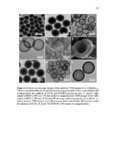
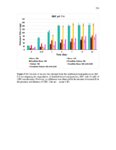
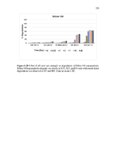
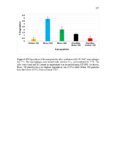
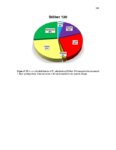
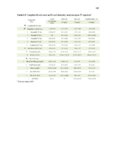
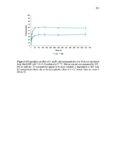
Show 250 Si-O-Si bonds, and subsequent release of silicic acid derivatives. Degradation studies conducted in RAW 264.7 macrophages and CD-1 mice, reconfirm the effect of porosity on degradation profile of the particles as Meso 100 nanoparticles displayed higher degradation and renal clearance than Stöber 100 and Disulfide Hollow 100 counterparts. In vivo results indicate that particle porosity and density do not have drastic effects on the biodistribution of the particles as the pattern was similar for all the particles with the highest accumulation in liver and lowest in kidney. These results have implications for controlled delivery using SiO2 NPs. For example, it is possible to increase loading capacity and tune degradation rates based on the desired location and rate of drug release as well as route of delivery. Based on our investigation of SiO2 NP degradation in different simulated biological fluids, these particles degrade very slowly in gastric fluid over 28 days whereas the degradation rates are much higher in intestinal fluid. These results suggest that if these particles are used for oral drug delivery (specially the mesoporous and hollow mesoporous particles as their loading efficiencies are higher than nonporous particles), they can bypass the gastric environment as the gastric residence time in fasted and fed states is about 1-3 h and these nanostructures do not degrade or release the cargo (or degrade and release to very negligible amounts due to diffusion) in this period of time in acidic pH of the stomach. When the particles reach to the small (with the residence time of ~9-12 h) and large intestine (with the residence time up to ~72 h), they can release their cargo for localized or systemic purposes. The pH value of the large intestine varies from 4 to 7 which is also similar to the pH values used in this study. As shown in Figure 5.18, mesoporous particles degraded up to 100% after 72 h in SIF pH 6.5 and this value for hollow particles is |