| OCR Text |
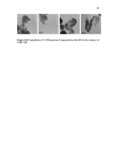
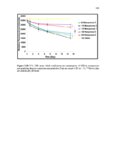
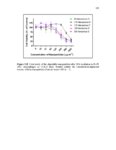
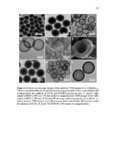
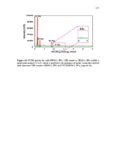
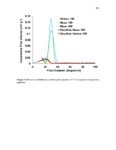
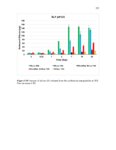
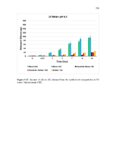
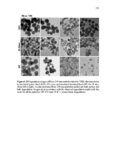
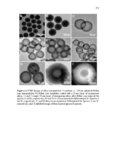
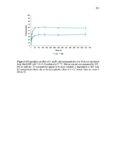
Show 271 A.2.5 Evaluation of in vitro degradation profile Degradation profile of the layer by layer HMSiO2 NPs (100 µg mL−1) was evaluated in simulated body fluid (SBF pH 7.4 ± 0.2) under constant rotation (120 RPM; Amerex Instruments Inc., Concord, CA, USA) at 37 °C. At predetermined time points (0, 2, 4, 6, 12 h, and 1, 2, and 4 days, and 1, 2, and 4 weeks), samples were collected in triplicate for silicon measurement using Inductively Coupled Plasma Mass Spectrometry (ICP-MS). A.3 Results and discussion A.3.1 Synthesis and characterization of layer by layer particles In order to evaluate the effect of multilayers, layer specific precursor contents on degradation kinetics, two species of layer by layer nanoparticles were synthesized using hydrolysis and co-condensation of the silane precursors in water/ethanol mixture under basic conditions. Precursors used in layer fabrication steps were tetraethyl orthosilicate (TEOS) and bis[3-(triethoxysilyl)- propyl] disulfide (BTESPD). These nanoparticles were approximately 190 nm mesoporous disulfide-based three layer by layer HMSiO2 NPs, (designated as Species A for inner layer 70% TEOS/30% BTESPD, middle layer 30% TEOS/70% BTESPD, and outer layer 100% BTESPD and species B for inner layer 70% TEOS/30% BTESPD, middle layer 100% BTESPD, and the outer layer with the same composition as the inner layer). Fabricated nanoparticles were then characterized using transmission electron microscopy (TEM) for evaluation of size, size distribution, and morphology (Figure A.1). TEM images of layer by layer HMSiO2 NPs indicate their spherical morphology. According to electron microscopy images, 3 layered mesoporous nanoparticles had |