| OCR Text |
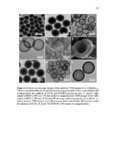
Show 261 not fully degrade over time. Ø A reliable method for in vivo nanoparticle detection also needs to be further investigated to understand the exact quantity and percentage of the degradation products found in urine, feces, and different organs. We should understand the size of the degraded fragments, as if they are less than approximately 5.5 nm, they can be excreted via urinary system. Ø Different dosing regimens (single vs. repeated doses) should be conducted in vivo to understand if multiple administrations can influence the toxicity and degradation profiles of the particles. In addition, different administration routes (oral, IV, IM, SC, etc.) should be examined to evaluate the effect of the route of administration on toxicity and degradation profiles. Ø Since in vivo biodistribution showed the presence of silicon in urine and it has been reported previously that intact silica nanoparticles with sizes larger than 100 nm could be found in excrement [3-5], it is necessary to evaluate whether the quantified silicon at injected doses less than the maximum tolerated doses (MTD) of the particles is from the intact nanoparticles or from the degradation products considering renal threshold of ~5.5 nm (the intact particles or degradation products cannot be easily observed by TEM in urine and fecal samples) [6]. It would be necessary to analyze the clearance pathway of intact nanoparticles or fragments. TEM images could be obtained for kidneys of animals postintravenous injection of silica nanoparticles to analyze the possible presence of intact nanoparticles or fragments thereof in the exit route and connect with the physiological status of nephrons. Such study will provide valuable information about renal clearance of silica nanoparticles. |