| OCR Text |
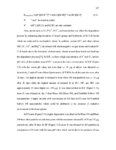
Show 20 reaction: the thiol is the reduced state, and the disulfide is the oxidized state. In the oxidized (disulfide) state, each sulfur atom has lost a bond to hydrogen and gained a bond to a sulfur. This is why the disulfide state is considered to be oxidized relative to the thiol state. Since an equilibrium exists between thiol and thiolate, it can be concluded that in acidic conditions, the reaction shifts in favor of the protonated thiol form (which is not a strong nucleophile) while in basic milieu mostly the deprotonated state (thiolate) dominates. When pH is higher than pKa + 2, based on Henderson-Hasselbalch equation: pH= pKa + Log[A-]/[HA] (2.5) approximately 99% of the thiol groups will be deprotonated which is suitable for thiolatedisulfide exchange reaction. Hence, in the case of polysulfide-based degradable mesoporous SiO2 NPs, if the particles escape from the endolysosomal compartments, they can be degraded in the cytosol (approximately pH= 7.4) via deprotonated GS- molecules. However, the degradation rate at this pH is low as the percentage of GS- anions is low [104]. If polysulfide-based nanoparticles are entrapped inside the lysosomes, the presence of gamma interferon-inducible lysosomal thiol-reductase (GILT) enzyme in lysosomal compartments might facilitate their degradation if the particles have pore size ~10 nm [105, 106]. Additionally, in lysosomes, the concentrations of cysteine amino acid are quite high which in turn can enhance the degradation process [107]. Maggini et al. showed that by embedding disulfide bridges in ~90 nm mesoporous SiO2 nanostructures, complete degradation of the particles (100 µg mL-1) can be observed in phosphate buffered saline (PBS) at 37 °C incubated for 7 days [90]. They also indicated that this process occurs in a GSH concentration-dependent manner in which more degradation is achieved at higher concentrations (10 mM > 5 mM > 2 µM). In addition, |