| OCR Text |
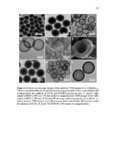
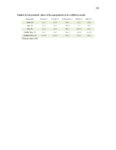
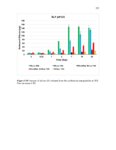
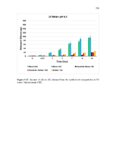
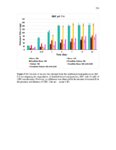
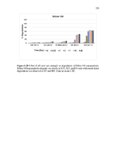
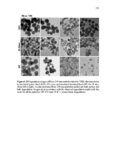
Show 36 2.5.2 Properties of the degradation medium 2.5.2.1 pH Variations in pH have a significant effect on the degradation of silica NPs [160, 180-182]. Li et al. showed that in simulated gastric fluid (SGF), the degradation of mesoporous SiO2 NPs was only up to ca. 10% after 7 days with no obvious change in the shape of the particles. However, the degradation was much more obvious in simulated intestinal fluid (SIF) and SBF media in an aspect ratio-dependent fashion whereas for spherical nanoparticles, the inner core eroded, resulting in the formation of hollow structures [183]. It was suggested that this phenomenon could possibly result from the surface protection of these nanoparticles by the adsorption of multiple ions present in the degradation medium such as bicarbonate and taurocholate [183]. This surface protection effect could make the particles more resistant to erosion. Braun et al. demonstrated pHdependent degradation of nonporous and mesoporous SiO2 NPs with the following order: simulated lung fluid (pH 7.4) > SBF (pH 7.25) ~ PBS (pH 7.4) >>> SGF (pH 1.6) [153]. Therefore, the solubility of silica in water is strongly pH dependent and increases substantially in basic environment due to the presence of more OH- ions which initiate the degradation process by nucleophilic attack on the electropositive Si atoms in silica network. Additionally, when pH of the medium increases, the equilibrium between silanol and silanolate (Si-OH ó Si-O- + H+) shifts to the right in favor of Si-O- production via deprotonation of the silanol groups. The more charged species, the more degradation in aqueous medium. The values for the surface acidity constants of silica have been reported to be pKa= -2.77 for the reaction of: Si-OH2+ ó Si-OH + H+ (2.8) |