| OCR Text |
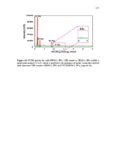
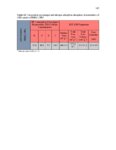
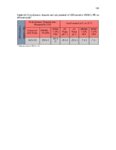
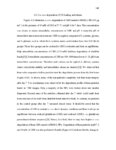
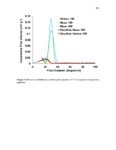
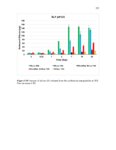
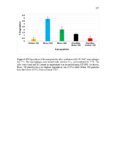
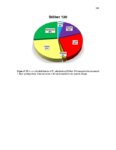
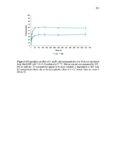
Show 238 control, intact nanoparticles were incubated in RPMI medium containing 10% FBS (without cells). No degradation was observed after incubation of the particles for 72 h with this media as measured by ICP-MS. 5.3.4 In vivo degradation and biodistribution For investigating the in vivo degradation and biodistribution, Stöber 100, Meso 100, and Disulfide Hollow 100 nanoparticles were selected based on the in vitro results. Nanoparticles at the dose of 25 mg kg-1 were tail vein injected to immunocompetent CD-1 (cluster of differentiation-1) female mice housed individually in metabolic cages for 7 days postinjection. Control mice were injected 0.9% sterile normal saline. Urine samples were collected in separate tubes at each time point from each mouse. No mortality or any sign of morbidity was observed for mice during 7 days. Figure 5.28 indicates cumulative percentages of Si measured in urine samples. The glomerular capillary wall has three different layers: fenestrated endothelium, glomerular basement membrane (basal lamina which is negatively charged), and podocyte extensions. The cut-off size for these layers is approximately 5.5 nm [42, 43]. Based on kidneys’ glomerulus anatomy, nanoparticles should degrade, become fragmented to sizes less than ~5 nm, and pass through these layers to be filtered and excreted in urine. As illustrated in Figure 5.28, Disulfide Hollow 100 nanoparticles had more renal excretion in the first 24 h (ca. 25.9%) while this value is ca. 11.6% and 21.7% for Stöber 100 and Meso 100 nanoparticles, respectively. However, after 7 days, Meso 100 nanoparticles have the highest degradation in mice with 53% of the degradation products containing Si detected in urine while for Stöber 100 and Disulfide Hollow 100 nanoparticles, Si excretion was 27% and 39%, respectively. Figures 5.29, 5.30, |