| OCR Text |
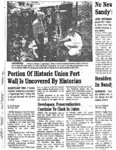
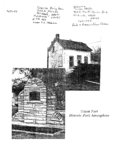
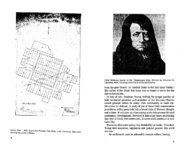
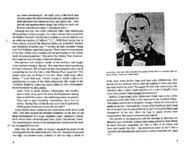
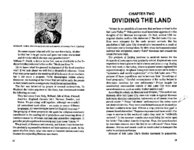
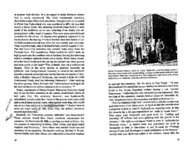
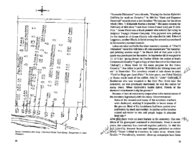
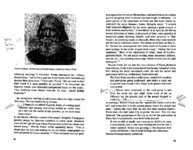
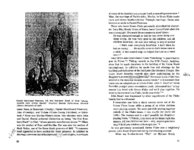
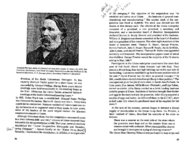
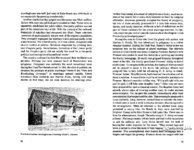
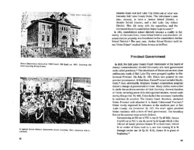
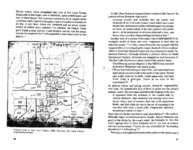
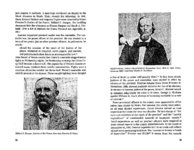
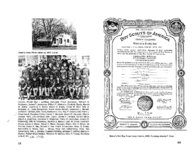
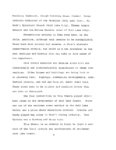
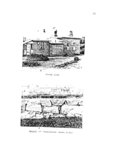
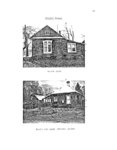
Show CHAPTER TWO DIVIDING THE LAND William P. Smith, Union's early doctor and dentist. Courtesy Eva L. Leyland. the same squaw returned with her new-born baby. Mother invited her in to get warm and gave her some warm food and drink for which she was very greatful [sic].14 William P. Smith, a doctor in the fort, was so charitable to the Indians that they referred to him as the "Medicine Man. "n Do we know what the general background of the local populace was? If we look closer we will find a diversified citizenry. Union Fort was never used in the warding off of Indians in direct warfare, but it did serve a purpose. Forts discouraged Indian attack. Moreover, the building of the Union Fort served to unify the people in their labors and to amalgamate the different nationalities. The fort was inhabited by people of several nationalities. To illustrate the Union populace at this time, Ann Greenwood related the following account: They had come from Italy, Holland, Isle of Man, Finland, America, England, Canade [sic], Norway, Sweden, and Wales. We got along well together, although we couldn't all understand each other - we spoke so many different languages. All were trying to learn the English language." The grouping of these peoples in the quest for religious sanctuary contributed to the casting off of prejudices and breaking down of barriers caused by different customs and unfamiliar languages. It gave the people significant reason to call their town "Union."57 The growth of Mormon settlements, and future Utah Indian battles gradually squeezed the Indians off their ancestral lands. In the space of a few years, what was once an honored Indian sanctuary . became the expanding Mormon sanctuary. 18 "Where do we establish a home now that we have arrived in the Salt Lake Valley?" This question must have been uppermost in the thoughts of the Mormon immigrants. (In fact, several LOS immigrant diaries confirm this statement.)' The Salt Lake City confines were adequate for the early pioneer arrivals. But the population of Salt Lake City dramatically increased as a result of continuous yearly immigration. By 1869, when the transcontinental railroad was completed, nearly 70,()()()2 Mormons had crossed the Great Plains to Utah. The problem of finding locations to establish homes for the thousands of newcomers was gradually solved. Explorations were organized to locate places to build a home and plant a crop. During their first week in the valley, Mormon pioneer scouts explored the region thoroughly. Brigham Young sent these scouts out to make a "systematic and careful exploration" of the Salt Lake area.' The purpose of these expeditions was to increase their "knowledge of local geography." Careful reconnaisance of the valley helped to determine locations for new settlements. 4 Prime targets for establishing communities outside of Salt Lake City were near natural resources, such as water, timber and rich soil.' According to a study on Mormon land division, "The earliest settlements after Salt Lake City were not made in typical Mormon :'l! fashion by directed colonization, but merely as off-shoots from the ,(',,l!' 1" parent center ...• These "off-shoot" settlements of the valley were ~' not plarinoo colonies. They were established because of the need f9r the best available farm land. Without a crop yield the first ~; a pioneer faced starvation. 7 T.o.grow.cfops-one-must-have-warer:-For crops to survive in this semi-arid region they must be "artificially watered.". In the summer months man must bring the water upon his fields.' This is best done by irrigation. Thus, the lands bisected by mountain streams were the first to be cultivated.' From these streams, ditches and canals could be constructed to transport the water to orchards and crops. Because of Salt Lake City's drastic increases in population, 19 |