| OCR Text |
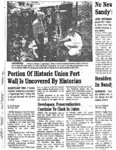
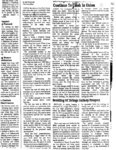
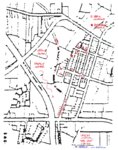
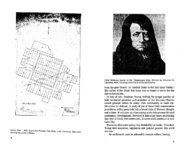
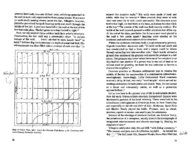
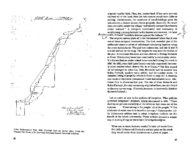
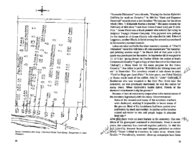
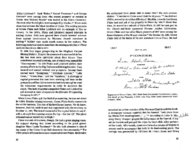
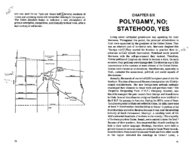
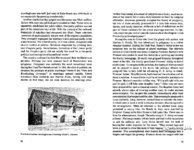
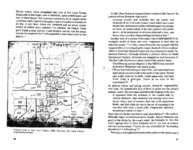
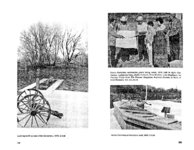
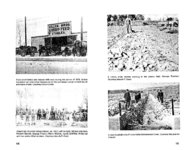
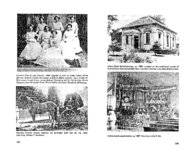
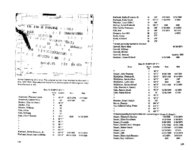
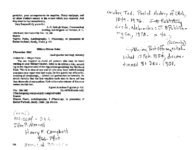
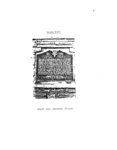
Show oriented dirt roads, two rods (33 feet) wide, with large gates built in the wall at each end, separated the three center blocks. There were no north-south tending streets inside the fort. Villagers, however, plotted a gravelbed footpath bearing north and south through the middle of the fort. A gate was installed in the wall at the end of this five foot wide alley. The fort gates were kept locked at nlght. 28 Next, we will see how Union settlers built their orderly structure. Constructing the fort wall was a community effort. '''A certain footage of the wall ... [was] allotted to each family head" to build. 27 Settlers dug the foundation to a depth of about four feet. The entrenchment was then filled with a mixture of rock and clay "to '" .V· ,~'ClI I ,0 s\f ~I CI)\e 1'\ L) A r.L-...!' -1- ;to ~fM /" // /' • H 7 ; .. ' JlUAJ M ~ o' .' J j .U ~J "i ./r . j' -'I " ' ' ., ... -c , / .~ i· . . .. .. .b -I of " f oS J J Map 01 Union Fort, 1857. From the Pioneer Plat Book, p.25. Courtesy Salt Lake County Recorder's Office. I support the massive walls." The walls were made of rock and adobe, with clay for mortar.2a When erected, they were 38 rods (east and west) by 42 rods (north and south). The structure stood twelve feet high, six feet thick at the base, and about two feet thick at the top.2t The outside of the wall was built exactly vertical. The inside of the wall tapered upward to within about six feet of the top. At the end of the slope, portholes (for firearm use) were placed in the wall a few yards apart.30 Bastions were erected on the southeast and northwest corners of the structure. Within the enclosure residents built a large community granary. Reports from later observers said, "It faced north and south and was constructed so that a team and a wagon could be driven through unloading into bins on either side." Each family utilized a ground floor section of the granary and stored its produce in a loft above. The granary was never locked because of the complete trust they had for one another. If a person was to run out of food or be without seed for planting, he knew he was welcome to borrow a share of his neighbor's." Common practice in Mormon settlements was to reserve the middle of the· fort for construction of a combination schoolhousemeetinghouse. Accordingly, Little Cottonwood Ward members erected a 20 by 36 foot, two story "mud temple" which served for meetings and socials for both school and church. Thus, the fort served as a home and community center, as well as a protection against Indians. 32 Let us now turn to the pioneer way of life in and outside the fort. How did early Union settlers entertain themselves? Dances were the favorite pastime of the local citizenry. These were held in the schoolhouse-meetinghouse at Christmas time, on New Years Day and especially on the 4th and 24th33 of July. At dances, Jacob Pate and Marion Brady played the fiddle. Produce, such as wheat, potatoes,'squash or onions, was used to pay for admission. Because of the shortage of clocks in the fort, one Brother Terry, the proud owner of a timepiece, usually alerted the townspeople of designated entertainments and church meetings by blasting his shepherd's horn. 34 Villagers celebrated July 4th and 24th "with fitting ceremony." "The cannon and guns were fired before daylight ... ·to herald the da~· :-:-:')." The Salt Lake City, Deseret Weekly News described o~EL '---. -. ~ 12 '. 13 |