| OCR Text |
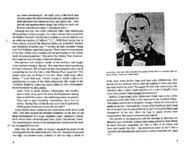
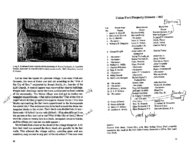
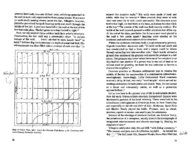
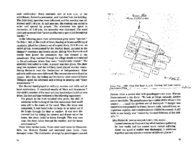
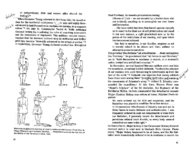
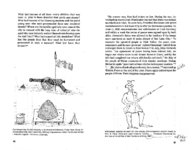
Show Today's physicians would be shocked at the treatment used to heal Frances' leg. Richards used skunk oil to remedy the stiff leg. After days "of persistent massaging, her leg was gradually straightened out and she was able to walk again." . Because of the geographical and economic isolation of Utah Territory, self-sufficiency became a principal goal in Mormondom. Although this was never fully achieved, it was, nevertheless, strived for. In Union, self-sufficiency was almost a duty. "We had to produce nearly everything we had," said Arm P. Greenwood, an early inhabitant of Union. Besides planting a vegetable garden to supply their food needs, they built their own houses, produced their own wool clothing, made their own soap and candles, and manufacttn-ed their own dyes. Also, the people of Union sweetened their food with mollasses. Each family grew a patch of sugarcane which could be made into the sweetener at the Robert B. Pate molJasses milL The scarcity of money contributed to the need for economic in~ dependence. Prices of manufactured goods that were freighted into Utah from "the States" were generally prohibitive. The lack of nails did not stop the shoemaker in Union from building shoes - he used wooden pegs to fasten the soles to the upper part of the shoes. Wooden pegs also substituted for nails in the building of houses and other structures in the fortified village." Bear in mind that these hard times could turn into episodes of tragedy without a defense structure. These people needed to be 1 militarily alert. According to an early Union settler, "during the ! ~,(; c, winter months Indians camped just north of the fort (_.-': ~ ."44 The (. presence of Indians in the ' vicinity of the fort reminded the populace of Union of the need for continued defense. Every ablebodied male citizen of Union between the ages of eighteen and forty-five41 belonged to the territorial militia. These men "had military practices and sham battles at intervals. "41 In addition, companies of "Minute Men" were attached to each regiment during the Walker WarY Union settler Warren Foote, a captain in the Cottonwood Military District of the Nauvoo Legion (territorial militia), noted that during this period, "the companies in our Military District were ordered to guard the kanions day and night. I spent twelve days in guarding but saw no Indians.' '4. .On July 15, 1854, Captain Foote "rode over to the muster ground 16 about a half a mile distant" from the fort, and participated in the organization of "a regiment [of infantry] in this district." Major (Easton) Kelsey was elected Colonel and Foote was elected Major.41 Reading some of the journal entries of Major Foote provides a glimpse of his responsibilities and activities in the militia. (Note that between October Zl, 1855, and December 25, 1856, his journal is missing.) It reads: [September 16, 1854.] Company B of my Battalion had a drill today, and I inspected them. [November 25,1854.1 We had a general muster. I inspected my battalion. Very fine weather. [February 17, 1855.] I have been appointed President of Courtmartial in this Military District. We held our first court today. [July 4,1855.] We had a general muster today. I attended to the inspection of the 2nd Battalion which is under my command. [July 16,1855'] By orders from headquarters, the two companies of my Battalion had company musters. I attended to the inspection of them. [January 12, 1857.] Colonel Kelsey is teaching the sword exercise here. I attended to night. so Under Warren Foote's command, those who were neglectful of their military duties were court-martialed. It was his responsibility l~ to "collect the fines according to the law" from the quilty party. These fines were then~paid into the Territorial Treasury:".~. _ ____ . • . Quoting an observer of this citizen~army, ills Historian Leonard Arrington wrote: "It was an 'uncouth, undisciplined, and ragged set of men,' with 'every variety of weapon known to civilized nations,' but it was a group, which in its own habitat, fighting for homes and families, could be ferocious and deadly. "u Be aware that although Union had a "ferocious and deadly" militia, its inhabitants were not inhumane toward the Indian. Although Brigham Young's General Order Number One read, "No \ person must be allowed to give . . . them any aid or comfort ~~t\e', whateveI1J',"n lJni0!l ha~dc?~~~~o~_~~~..~e _afflic~~ . Illdian~ One resident of Uiiion recalle : . ' .. I remember one cold day wheri an Indian squaw came to our door and told mother that she was sick. Next morning . 17 |